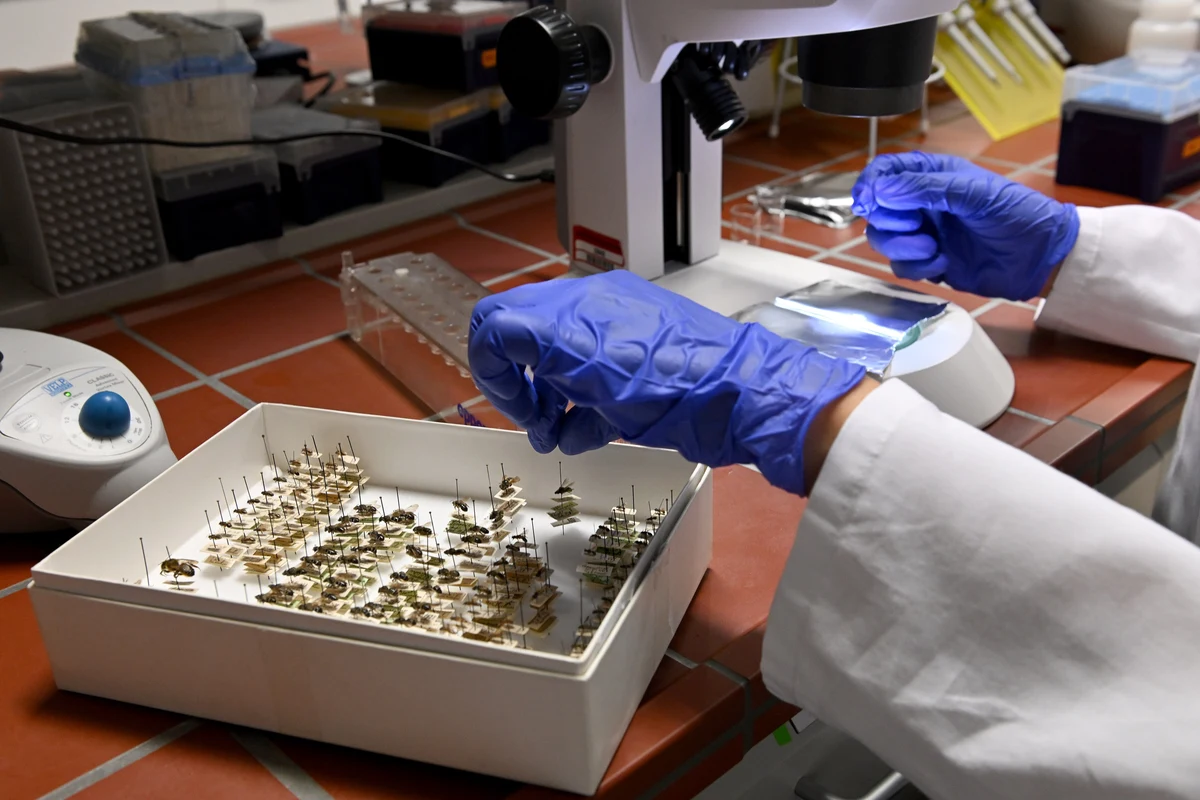
01Are misidentifications common?
A shortage of taxonomists is not only a problem for science. As I showed in the first part, decisions with a direct impact on agriculture, health and conservation, among other fields, depend on identifying a species correctly, and there I described several cases in which a misidentification proved costly. The question now is a different one: are they exceptions, or does it happen often? And if it happens often, does it have to do with a shortage of specialists?
Error cascades
Alejandro Bortolus, a researcher at Argentina's CONICET, reviewed 80 community ecology papers published between 2005 and 2007 in leading international journals. Of these, 62.5% gave no information to justify the identification of the organisms studied, and only 2.5% stated that voucher specimens had been deposited in a scientific institution, so for the rest it is not even possible to check afterwards which species was studied. Because ecological studies underpin many other disciplines, a misidentification does not stay in one paper, but can spread and be amplified to other studies and even to environmental management programmes: this is what Bortolus called "error cascades".
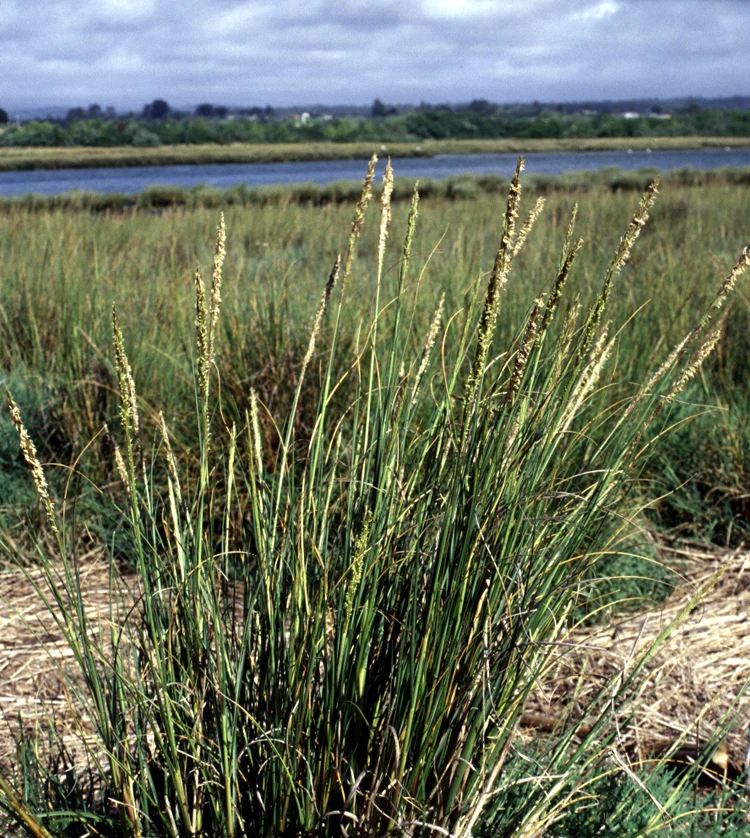
In San Francisco (California), for example, a restoration project in the late 1970s transplanted a cordgrass in the belief that it was the native species, Spartina foliosa. It was in fact S. densiflora (Fig. 1), which was not correctly identified until some 30 years later, by which time it had spread along the west coast of the United States, massively displacing native organisms and transforming the landscape of the region. By then, eradicating it might be possible, but with no guarantee of success and at a high cost (Bortolus 2008).
A recurring pattern
Other studies, in very different groups and regions, find the same (Fig. 2). Among 4,500 specimens of African gingers held in 40 herbaria in 21 countries, at least 58% bore a wrong name before a recent taxonomic revision. The authors also estimate that, on average, more than half of the tropical plant specimens in the world's collections are probably misidentified (Goodwin et al. 2015). In herbarium specimens of ivies (Hedera) from western Europe, from 40 herbaria, 18% were misidentified on average, with maxima of 38% in the United Kingdom and 27% in Spain. According to the authors, these errors, together with the specimens that were not even identified to species level, were mainly due to the fact that those who identified them were not familiar with the diagnostic characters of ivies (Coca-de-la-Iglesia et al. 2024).
Bolotov et al. (2024) reviewed a selection of 25 non-taxonomic works with misidentified freshwater mussels, including records from the Philippines and West Africa of the freshwater pearl mussel (Margaritifera margaritifera), a threatened species that in fact lives only in eastern North America and Europe. And in a national biodiversity monitoring network in the United States, parataxonomists, staff who may lack formal taxonomic training, misidentified 11.1% of ground beetles. Although overall their richness estimates were similar to those of the experts, error rates of only 5% were enough to distort the gradient of species richness between regions, and non-native species were detected that were not there or others that were present were missed (Egli et al. 2020).
Modern tools are not safe from these errors either. In fungi, around 20% of the sequences deposited in public DNA databases may be misidentified at species level (Nilsson et al. 2006), and anyone comparing their samples with them may inherit that error without knowing it. In a study of almost 4,000 trees of the genus Inga in the south-western Amazon, between 6.8% and 7.6% were misidentified on the basis of their vegetative characters. These errors did not change the overall conclusions about the communities, but they strongly affected some species-level analyses, and the authors found that a purely molecular approach would also have made significant errors: the greatest accuracy is achieved by combining morphology and DNA (Dexter et al. 2010).
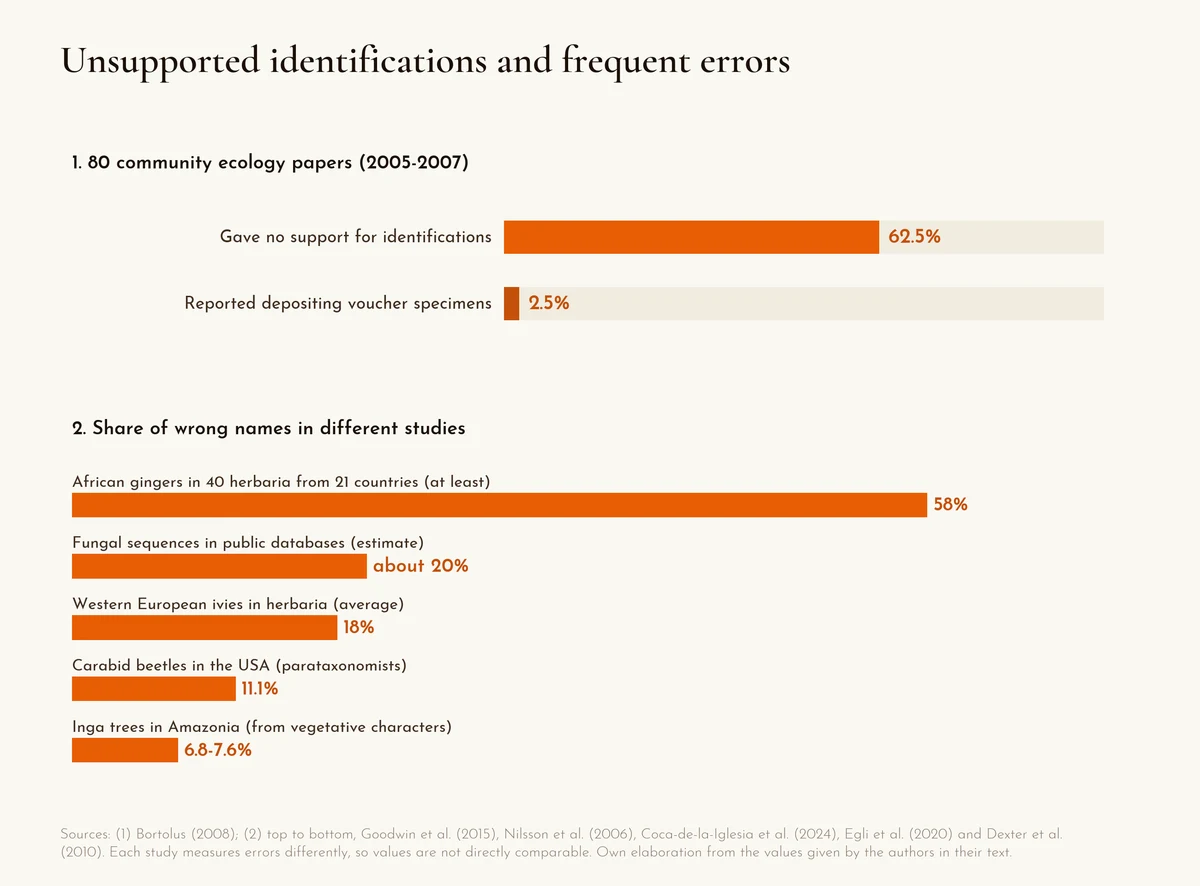
According to the studies reviewed, between around 7% and more than half of specimens or records bear the wrong name, depending on the group and the method. Some link these errors to a lack of taxonomic training on the part of whoever makes the identification, and document how they can spread to other works and to management decisions. The question, then, is whether there are ways of identifying species, and of describing those still missing, that depend less on taxonomists.
02Are there shortcuts?
Identifying without specialists?
One of the first proposals was DNA barcoding. Hebert et al. (2003) put it forward because, in their view, much biological research depends on identifying species correctly, and fewer and fewer specialists are able to do so. DNA barcoding, as we saw in the first part, identifies specimens by comparing a fragment of DNA with a library of reference sequences. For them, it was the only way to maintain the ability to identify species in the long term, and their first results were promising: with a library made up of one specimen of each of 200 closely related species of Lepidoptera, they correctly identified all the specimens they analysed afterwards (Hebert et al. 2003).
The same logic has since been applied to other techniques. Environmental DNA metabarcoding collects the DNA that animals leave in the water, for example through their skin, mucus or faeces, sequences it and assigns each sequence to a species by comparing it with public databases, without the need to capture the animals (Marques et al. 2021). For decades there have also been efforts to develop systems that identify species automatically from images, precisely because of the shortage of specialists (Valan et al. 2019), and others that recognise them by their sounds (Stowell 2022). And MALDI-TOF mass spectrometry, which compares the protein profile of a specimen with a reference database, has been proposed for identifying mosquitoes, according to its authors even without specialist knowledge (Yssouf et al. 2013).
All these techniques work in essentially the same way: they compare each sample with a reference that has already been identified, whether a library of sequences or a set of images, spectra or recordings. And their reliability depends on that reference: on it being correctly identified and complete. In other words, for these techniques to be reliable, specialist taxonomists are needed to build, or at least verify, those references.
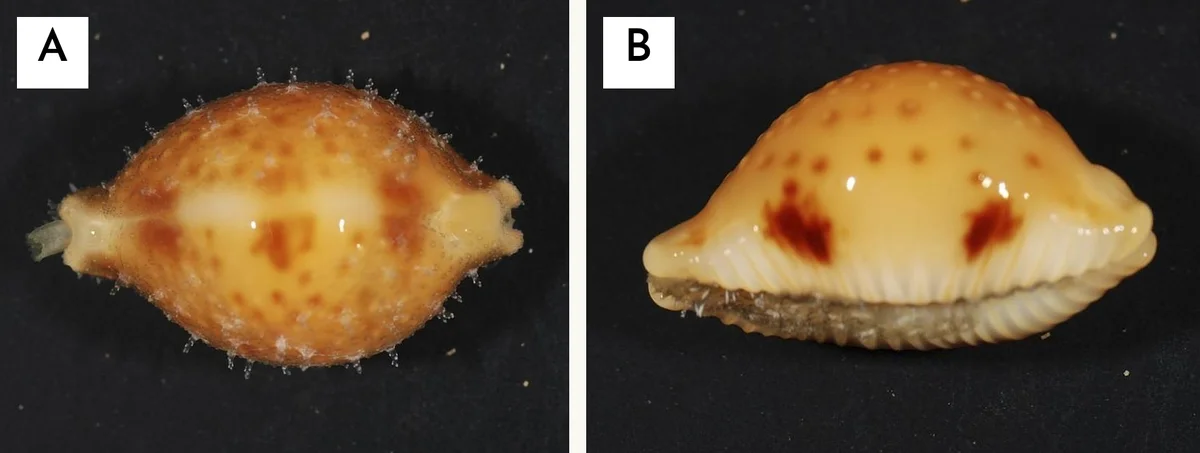
In DNA barcoding, for example, the sequence libraries themselves contain errors, as we saw in the previous chapter (Nilsson et al. 2006). The library must also be complete, and that requires having collected and correctly identified enough specimens of each species to represent its intra- and interspecific variability well. In a very well-studied group of marine snails, the cowries (family Cypraeidae), Meyer and Paulay (2005) compared specimens against a very complete library, based on a detailed taxonomic revision that combined morphology and DNA. Even so, in the best case, between 4% and 12% of identifications were wrong, partly because some recently originated species cannot be told apart by that DNA fragment (Fig. 3). In poorly sampled groups, the method performs even worse (Meyer & Paulay 2005; Wiemers & Fiedler 2007). According to Meyer and Paulay (2005), DNA barcoding will only live up to its promise if it rests on solid taxonomic foundations. Other studies also recommend caution when using it as the only tool for identifying or delimiting species (Hickerson et al. 2006; Meier et al. 2006; Rubinoff et al. 2006; Wiemers & Fiedler 2007), and Collins and Cruickshank (2013) point to frequent errors in the design of these studies.
In environmental DNA, another of the techniques mentioned above, the main limitation is that the databases are incomplete. In fish, for example, these gaps grow towards the tropics, which is where both the greatest species richness and the largest number of threatened species are concentrated. In freshwater fish, with one of the markers analysed, the available sequences covered 83% of species in basins between 48° and 52° north, but only 23% in those near the equator (Marques et al. 2021).
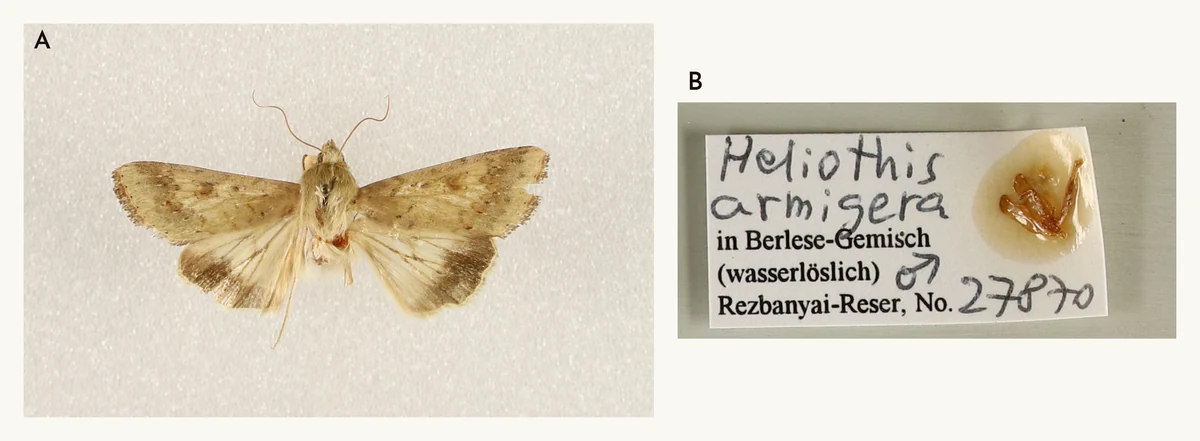
Something similar happens with images. These programs typically need hundreds of images of each species to learn to detect it, and gathering and labelling them is slow, difficult and expensive (Høye et al. 2021), although some methods achieve good results with 100 images or fewer per category (Valan et al. 2019). Those images must also be correctly identified, and Høye et al. (2021) recommend verifying the identifications with several specialist taxonomists or with DNA, whose reliability, as we have seen, also depends on taxonomists. Moreover, in groups with very similar species, it may simply not be possible to identify a specimen with certainty without preparing its internal genitalia (Valan et al. 2019; Fig. 4), which in practice means capturing and killing it. And for it to serve as a reference, its diagnostic characters would have to be photographed before and after dissection, which usually requires specialised equipment and advanced knowledge.
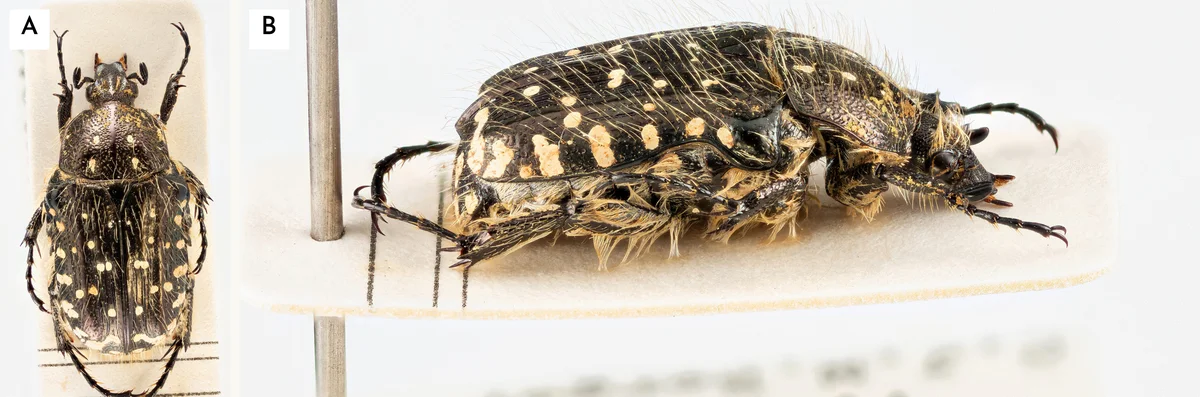
Valan et al. (2019) tested their system with three species of beetles of the genus Oxythyrea that are very difficult to tell apart, and it was correct in 97% of cases, more than a leading specialist. But the authors themselves acknowledged that, in North African specimens, these species cannot be identified with complete certainty from the dorsal view alone: the ventral side must also be examined, and the shape of the genitalia and the collecting locality help (Sabatinelli 1981, Mikšić 1982 and Baraud 1992, cited in Valan et al. 2019; Fig. 5). With that information, according to them, the best specialists could outperform the program. And these systems struggle with rare species, because there may not be enough specimens of the rarest to train them, and detecting species that do not appear in their training data requires specific techniques (Høye et al. 2021).
The same is true of mass spectrometry. In the MALDI-TOF study, the system correctly identified all the mosquitoes it was tested with, but it should be borne in mind that it only had to choose between the 20 species in its database. That database, moreover, was built from specimens identified by their morphology using identification keys, something that, according to the authors themselves, requires entomological expertise and training (Yssouf et al. 2013).
Programs that recognise animals by their sounds need many labelled recordings, which sometimes only a specialist can label, and specialists usually have little time available to do so. Moreover, research with these techniques has focused mainly on birds and marine mammals, so it does not reflect the diversity of animals that produce sounds (Stowell 2022).
Their reliability, moreover, varies greatly from group to group. In bats, several species cannot be identified with certainty from their echolocation calls, and no program has come close to 100% accuracy (Russo & Voigt 2016). In a study in Sweden, three programs recognised the species with the most distinctive calls well, but not others: in two species of the genus Myotis, correct identifications ranged from 0 to 98% depending on the program and the species. The authors also asked three colleagues to identify part of those recordings manually. They outperformed the programs in almost every case, but two of them also confused Myotis species, and the authors warn that, even manually, identifying the species of this genus carries a clear risk of considerable errors (Rydell et al. 2017).
For birds in the Brazilian Amazon, two automatic identification programs in global use, BirdNET and Perch, detected on average only between 8% and 11% of vocalisations, and performed worse with the most diverse families (Metcalf et al. 2026). With four species of anurans in the north-eastern United States, identifying the recordings by ear produced fewer than 2% errors, compared with 18-31% for automated methods (Brauer et al. 2016). And in Orthoptera, although an automatic identification program trained for 17 species from northern Germany correctly detected the presence of the species in 86.4% of cases in independent test data, its authors recommend that a specialist verify the results (Bennett et al. 2025).
So, when it comes to identification, these techniques can help a great deal, but they still need specialists to build their references and check their results.
Describing faster?
Identifying species that are already known is only part of the work. The other part is describing those still missing, and at the current rate, in Diptera it would take centuries even for the well-studied groups (Cerretti et al. 2025). To speed up the discovery and description of species, several authors have advocated a DNA-based taxonomy (Tautz et al. 2003 and Blaxter 2004, cited in Ziegler et al. 2025). Blaxter (2004), for example, proposed defining, from DNA sequences, molecular taxonomic units of a similar scope to traditional species. To this have been added genomic tools that analyse thousands of markers, statistical methods that estimate how many species there are in a sample from molecular data, and studies suggesting that morphology often underestimates the number of species (Ziegler et al. 2025).
This last idea is also debated. It has to do with so-called cryptic species: distinct species that cannot be told apart by their appearance and are only detected with DNA. In groups that are difficult to study, DNA has made it possible to detect many possible new species of this kind, but, once separated, morphological differences that distinguish them are often found as well. And in well-studied insect faunas, only between 1 and 2% of species may be truly cryptic (Stork 2018). For Korshunova et al. (2019), in fact, there is no clear boundary between "cryptic" and "non-cryptic" species: whether a species looks cryptic depends on the level of detail at which it is studied.
Delimiting species solely by a genetic distance threshold, that is, treating as different species any specimens whose DNA differs by more than a fixed percentage, can also go badly wrong. In the cowries, the marine snails from the study by Meyer and Paulay (2005) that we saw earlier, the intraspecific genetic variation (within each species) and the interspecific difference (between closely related species) overlapped, and even with the most favourable threshold the error was around 17%, and almost twice that when the species traditionally recognised by their morphology were taken as the reference. According to these authors, this overlap is likely to be significant in most major animal groups, particularly in highly diverse and poorly studied ones.
Will and Rubinoff (2004) argue that DNA barcoding cannot replace morphology. The alternative proposed by other authors is to combine several sources of evidence, what Dayrat (2005) called "integrative taxonomy", which seeks to delimit the units of life's diversity from multiple and complementary perspectives, such as comparative morphology, population genetics, phylogeography, ecology, development or behaviour. Padial et al. (2010) championed it as the future of the discipline.
In practice, has the way species are described changed? Ziegler et al. (2025) checked this with new species from nine major groups of living things. In the largest, such as arthropods, molluscs and plants, which together account for around 90% of known species, most new species were still described using morphological data alone. In other groups, such as chordates or fungi, most combined molecular and morphological data, and only 2 of the 500 new species analysed were based solely on molecular data. According to the authors, many of the new tools for delimiting species are hardly used, probably because they are not the fastest way to describe species before they become extinct.
Another analysis reviewed more than 4 million documents indexed in Web of Science between 1988 and 2023 on animals, land plants, fungi, several protist lineages and cyanobacteria. The proportion of studies using molecular methods grew rapidly when they were first adopted, but then levelled off, usually at around 25 to 45% (diatoms are an exception) (Kollár et al. 2025, cited in Kollár 2026). For Kollár (2026), this levelling off indicates that molecular techniques are being integrated with traditional ones rather than replacing them.
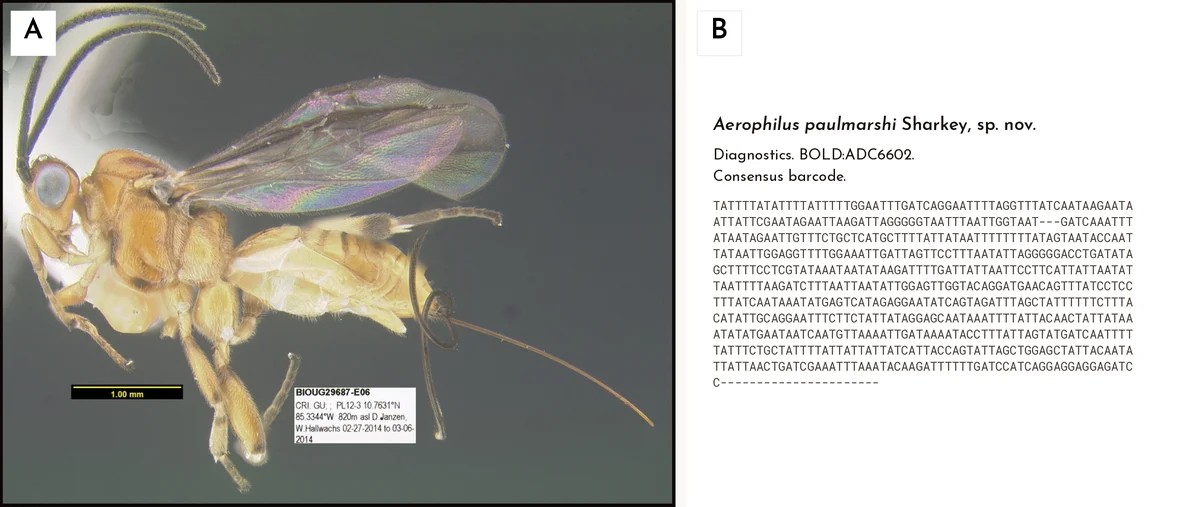
Other authors have proposed speeding up the description itself. With the stated aim of overcoming the taxonomic impediment, Sharkey et al. (2021) described or redescribed 416 species of braconid wasps from Costa Rica (all but 13 new to science) in a single paper. They distinguished the species mainly by their DNA barcode, although in some species complexes they also used morphology and, in 55% of cases, rearing data. Most of the descriptions consist of a lateral or dorsal image of the holotype, a consensus sequence of its DNA barcode, its BIN code with a link to the BOLD database, and the holotype data required by the Code (Fig. 6).
Engel et al. (2021) criticised this kind of proposal: they reject the idea that a DNA barcode can replace the description of a species and argue that the underlying problem is not a lack of techniques, but of taxonomists. Meier et al. (2021), for their part, reanalysed the data of Sharkey et al. with different species delimitation methods and concluded that many of their species are not stable, that a consensus barcode does not work as a diagnosis and that COI on its own is not enough to delimit and describe species. Fernandez-Triana (2022) adds that such works are not as fast as they seem. In the case of Guanacaste, in Costa Rica, they relied on years of prior work, with parataxonomists and technicians who collected, reared, databased and sequenced thousands of specimens before the taxonomists' work began. Moreover, if a species is described from DNA alone, anyone who later wants to identify a specimen will first have to sequence it.
Not all shortcuts are like this. Butcher et al. (2012) described 179 new species of wasps of the genus Aleiodes from Thailand by combining DNA barcodes with morphology, with photographs, brief descriptions and an illustrated identification key, although it took them longer than expected. According to Agnarsson (2026), the shortcuts that work save time by allocating effort better, not by reducing evidence. And a poor description does not save time either: in spiders, between 2013 and 2024 alone, 335 species described by Embrik Strand and 162 by Cândido de Mello-Leitão were invalidated, and each of those synonymies required revisionary work that would not have been needed with adequate descriptions (Agnarsson 2026).
For now, then, DNA only speeds up the description of species when it rests on a great deal of prior work, such as large reference libraries carefully checked by taxonomists, and it does not replace morphology.
Without collecting?
Another way of speeding up description would be to do without specimens, which would also avoid killing them. In 2014, Minteer et al. argued that it is no longer necessary to collect specimens to describe a species (cited in Marshall & Evenhuis 2015). The following year, Marshall and Evenhuis (2015) described a new fly from South Africa from photographs alone, because the specimen they caught escaped before they could preserve it. Even so, they maintain that specimens remain the best reference, and that a species should only be described without one when it is not possible to preserve any. According to their interpretation of the Code, such a description is valid, because the Code allows a specimen to be designated as the holotype through its illustration, even if that specimen no longer exists (ICZN 1999, art. 73.1.4).
In 2016, 35 researchers defended this kind of description in Nature (Pape et al. 2016). They were answered by 493 taxonomists and collections researchers, in a text that Nature declined to publish and that appeared in Zootaxa. According to them, modern descriptions need at least one type specimen deposited in a museum, because it has many characters that cannot be seen in a photograph and it is what makes it possible to test and refute what is claimed. They also warn that this kind of taxonomy would encourage the spread of descriptions based on evidence that cannot be verified (Ceríaco et al. 2016). Today, with artificial intelligence tools capable of generating realistic images, that risk is even greater.
Byrne (2023), in turn, proposed "compassionate collection", which would reduce harm to animals by taking non-lethal samples, such as DNA, photographs or recordings, and use new technologies so that collecting whole animals is no longer necessary. A group of 119 researchers replied that photographs, recordings and DNA sequences, whether separately or together, do not provide information of the same quality as a whole specimen (Nachman et al. 2023).
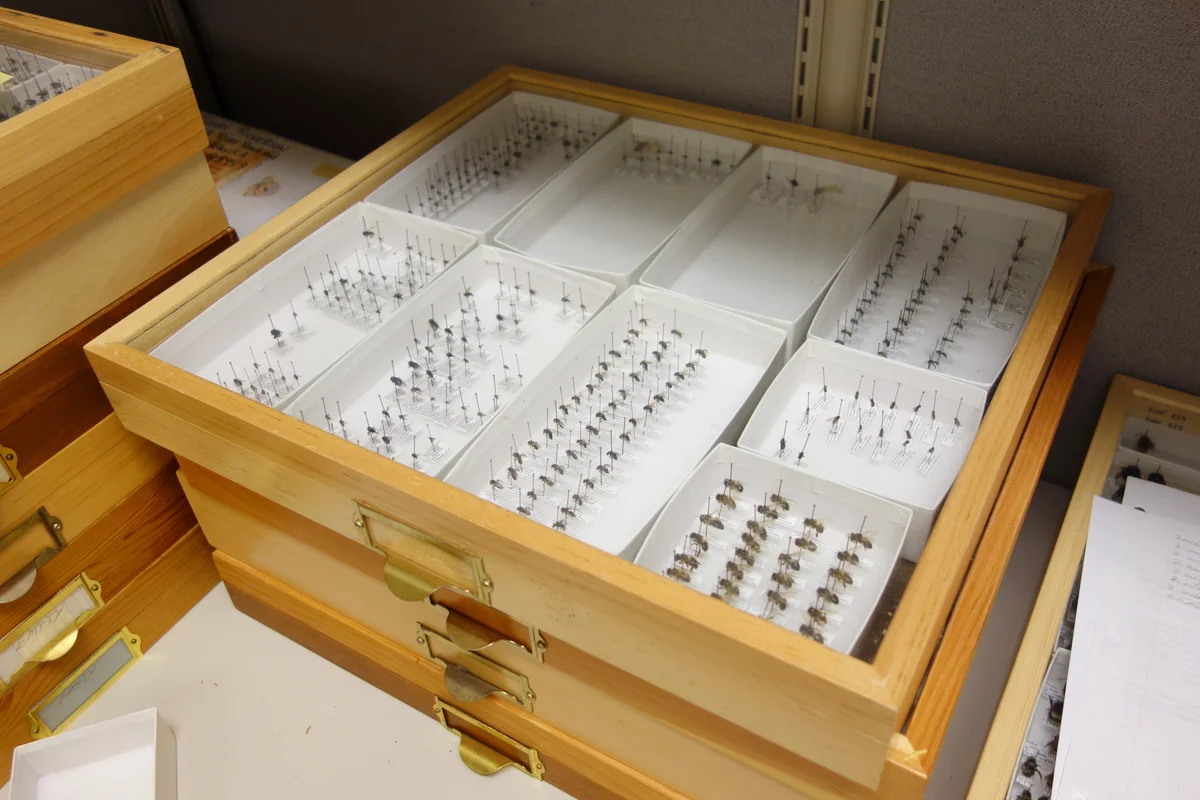
There are several reasons. As we saw in the first part, since 2000 every new animal species must have a holotype (or syntypes), the reference specimen to which its name is tied, and the collection in which it is deposited must be stated (ICZN 1999, art. 16.4). That specimen is the physical reference against which other individuals can be compared. Moreover, most animal species are small arthropods, such as insects and mites, most of which cannot be found by non-lethal means or identified without examining them under a microscope. Non-lethal samples also do not make it possible to take full advantage of the opportunity to link genetic information to the traits of the organism, whereas a whole specimen can be studied again in the future with techniques we cannot even imagine today (Nachman et al. 2023; Fig. 7). And in taxonomy the future arrives late: in a sample of species described in 2007 an average of about 21 years passed between the first collection and the description, and sometimes more than a century (Fontaine et al. 2012a; Conle et al. 2020).
The other major objection is that scientific collecting harms populations. The studies that have measured this have not found that effect. In birds, the calculations of Remsen (1995) show that the effect of scientific collecting on most populations is negligible. The author also points out that it is the only cause of mortality that is so tightly controlled, while other human activities kill far more birds. In wild bees, an experiment that removed an average of 2,862 specimens per season, sampling every two weeks between 2009 and 2012, found no effect on the abundance, species richness, evenness or functional group composition of the communities sampled (Gezon et al. 2015). And in small mammals, long-term monitoring data suggest that trapping with removal of specimens has a minimal impact on species richness, diversity and abundance (Hope et al. 2018). Even so, these last authors acknowledge that few studies have measured these effects directly and call for the effects of low-intensity collecting to be studied in other groups and biomes.
Other authors compare scientific collecting with other causes of death. The entire vertebrate collection of Museums Victoria, in Australia, holds fewer than 200,000 specimens collected in that state over more than 150 years, fewer than one per square kilometre, and, according to Clemann et al. (2014), the impact of scientific collecting on wild populations is usually minute compared with that of predation, disease, road kill or habitat loss. In Neotropical bats, Moratelli (2014) estimates that collecting 20 or 30 specimens a year at the same locality does not affect the populations of the commonest species, and notes that a couple of owls, hawks or falcons remove far more individuals than biologists do. And in birds, according to Collar (2000), not even in the great era of museum expansion, when some collecting may have been excessive, is there a single documented case of an extinction directly caused by it.
That does not mean the risk is zero. According to Kozel et al. (2017), pitfall traps, widely used to study cave fauna, can reduce the populations of some species if they are kept for a long time or repeated at the same points, which is especially serious for protected species or those with small populations. Waeber et al. (2017) point out, for example, that some endemic scorpions from Madagascar, with very long life cycles, could be threatened by the destruction of their habitat and by intensive collecting, scientific and otherwise. And in Malawi, where little forest remains outside reserves, Dowsett-Lemaire et al. (2015) consider it likely that repeated bird collecting in small reserves, with hundreds of specimens per campaign, threatens some isolated populations. For this reason, several of these authors advocate prudent collecting that first assesses the state of the populations (Collar 2000; Clemann et al. 2014; Dowsett-Lemaire et al. 2015). In any case, according to Waeber et al. (2017), collecting specimens is justified in most cases and remains necessary.
So, according to the studies reviewed, new techniques can help to identify and describe species, and even, as we will see, to attract funding for taxonomy, but they are not a shortcut that makes it possible to do without taxonomists: they all depend on correctly identified references, and these, in turn, on specimens studied by taxonomists and kept in collections. And if taxonomists are lacking, so are reliable references. In fish, for example, as we saw, the gaps in the databases are largest precisely in the tropics, where there are most species (Marques et al. 2021).
03What has worked
The documented cases I have found point to three things: stable funding, teams that combine specialists, parataxonomists and new techniques, and the work of amateurs and retirees.
Money to train and hire
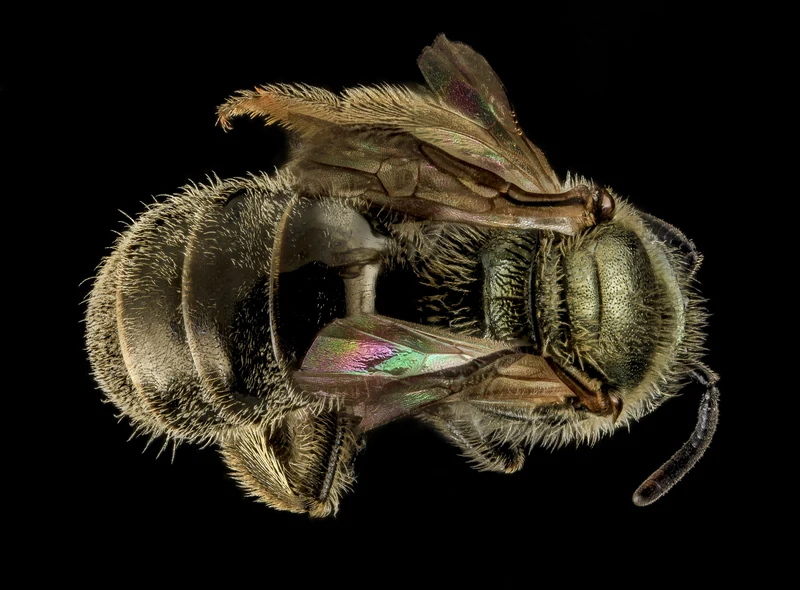
As we saw in the second part, between 1991 and 2007 the funds that Canada's main public funding body for the natural sciences devoted to taxonomic research through one of its committees fell by 55% in real terms (Packer et al. 2009). But the same study also shows the other side: when funding linked to DNA barcoding arrived, resources for taxonomy returned to levels close to those of 1980 and the number of people training in taxonomy increased greatly. And not only in molecular techniques: in the laboratory of one of the authors, those funds made it possible to complete two major revisions of the Canadian species of two groups of bees (Fig. 8) (one of them with more than 200 illustrations) and four smaller revisions (Packer et al. 2009).
In the United States, the National Science Foundation launched the PEET programme (Partnerships for Enhancing Expertise in Taxonomy) in 1995, with three objectives: training new taxonomists, producing monographic revisions and creating computing infrastructure. Each project received 750,000 dollars over five years, and by 2007 more than 60 had been funded (Rodman 2007). Of the 42 trainees planned in the projects of the first call, 33 (79%) reported having obtained a full-time position related to their taxonomic interests (Rodman & Cody 2003, cited in Rodman 2007). A later survey of trainees from the 1995 and 1997 calls found a lower proportion, 53% (Agnarsson & Kuntner 2007, cited in Rodman 2007).
In Brazil, the São Paulo Research Foundation (FAPESP) launched the BIOTA/FAPESP programme in the late 1990s to promote research on biodiversity. In terrestrial invertebrates alone, it funded 26 projects that generated some 1,140 publications, with the description of 1,187 new species and 76 new genera. Nearly 300 of the people who took part in those projects were students, 95 of them master's students and 75 doctoral students (Noll et al. 2022).
Specialists, parataxonomists and techniques, together
In the Área de Conservación Guanacaste, in north-western Costa Rica, a team of Costa Ricans who live in the area, with primary or secondary education, has been rearing caterpillars, their food plants and their parasitoids since 1978. They are the parataxonomists, known locally as "gusaneros", who numbered 33 in 2011. They are not volunteers: they are long-term employees, paid by the Conservation Area or by externally funded projects. Their daily work is coordinated with a broad network of specialist taxonomists from different institutions, and since 2003 it has been combined with DNA barcoding. By early 2011, between reared caterpillars and collected adult moths, some 9,000 species distinguishable by their barcode had been sequenced, which raised the estimate of the total number of Lepidoptera species in the area from 12,500 to 15,000. Even so, the authors themselves point to two limitations: more resources are needed to preserve and curate the reference specimens, and when DNA splits what was considered a single species into several cryptic ones, it is often unclear which of them the type specimen of the existing name corresponds to (Janzen & Hallwachs 2011).
By rearing caterpillars, they also obtain the parasitoids that emerge from them, including braconid wasps. About half of the new braconid species of Sharkey et al. (2021) that we saw in the previous chapter come from this material, and several are named after parataxonomists, such as Chelonus hazelcambroneroae, dedicated to Hazel Cambronero (Sharkey et al. 2021).
Amateurs and retirees
A significant proportion of new species are not described by professionals. In Europe, between 1998 and 2007, taxonomists who were paid to do taxonomy described only 37.8% of new species; the rest were described by amateurs and retired professionals. And not only in conspicuous groups: non-professionals described 52.7% of new Diptera and 26.7% of new mites (Fontaine et al. 2012b).
In marine molluscs worldwide, 40% of the first authors of descriptions are amateurs, and they sign 57% of new species. Bouchet et al. (2016) also found that they do not focus only on large, showy species, and conclude that, given the scant support from academic institutions and research funding bodies, the inventory of the world's marine molluscs depends on the massive participation of these amateurs. In other words, amateurs partly make up for a shortfall, but they do not solve it.
This contribution, moreover, is not guaranteed either. In the United Kingdom, the number of amateurs publishing taxonomic papers in a leading entomological journal declined from the 1950s, and that of professionals from the 1960s. Amateur activity rose slightly from the 1980s, without returning to earlier levels, and the authors attribute this rise, probably, to a few recently retired professionals rather than to a new generation of amateurs (Hopkins & Freckleton 2002).
04What would be needed?

None of these cases does without taxonomists. And the solutions proposed in the literature reviewed recur quite consistently, and largely respond to the causes we saw in the second part. Löbl et al. (2023), for example, call, among other measures, for a significant increase in funding for permanent positions for taxonomists, above all in natural history museums. They also call for taxonomic research and teaching to be restored in universities, with permanent faculty positions; for researchers to no longer be evaluated with journal-based metrics and for the focus to be on quality; and for an end to the trend towards prohibitive legislation on scientific collecting and the international exchange of specimens, creating instead legal frameworks that support biodiversity research. Training new taxonomists and hiring them in permanent positions is, moreover, one of the three major challenges identified by Britz et al. (2020; Fig. 9).
International collaboration is key: papers describing new species signed by authors from tropical countries with high biodiversity and little taxonomic infrastructure have very high rates of international collaboration (Grieneisen et al. 2014). And, as we saw in the second part, permit procedures make precisely that collaboration difficult. Neumann et al. (2018) and Acosta and Pérez-González (2019) do not question the need to regulate access to biodiversity. What they propose is to distinguish between commercial use and non-profit research, and to simplify access to biological material for the latter, something that the Nagoya Protocol itself provides for, albeit somewhat vaguely, in its Article 8, which calls for simplified measures of access for non-commercial research (Acosta & Pérez-González 2019).
As Domínguez and Dos Santos (2014) point out, citing Smith et al. (2011), taxonomy is the hidden service behind activities ranging from biodiversity conservation to food security, human welfare, new industrial products or ecotourism. According to these same authors, because its economic benefit may not be evident in the short or medium term, taxonomy has long suffered from a lack of funding. Moreover, training a taxonomist takes years, and when funding is interrupted, even briefly, specialists move on to other work and rarely return to taxonomy.
The series began with Linnaeus. Almost three centuries later, generations of naturalists and taxonomists have named some 2.3 million species (Catalogue of Life 2025), and the years with the most new species described, more than 16,000 each, have all been since 2015 (Li et al. 2025). But millions remain to be named (Costello et al. 2013a), many of them in the tropics, where taxonomists and references are lacking, and some may disappear before anyone describes them. Whether they ever get a name does not depend on any machine, but on there being trained people with the means to do it. And, if so many activities depend on taxonomy, it seems reasonable that those who benefit from it, whether authorities, companies, nature reserves or individuals, should also contribute to sustaining it. So, to the question in the title of this article, what emerges from the studies reviewed is that there are solutions, but no shortcuts: stable funding to train and hire taxonomists, a way of evaluating their work that does not penalise them, permits that do not hold back non-commercial research and well-maintained collections. None of them is new. What is missing is the decision to put them into practice.
References
Show all 84 references
- Acosta, L.E. & Pérez-González, A. (2019). ¿Quién va a describir nuestra biodiversidad?: el impedimento taxonómico frente al Protocolo de Nagoya y las normativas vigentes. Revista del Museo Argentino de Ciencias Naturales, 21(1), 17–27. https://doi.org/10.22179/REVMACN.21.629
- Agnarsson, I. (2026). Taxonomy takes time: shortcuts to synonymy. Taxonomy, 6(3), 56. https://doi.org/10.3390/taxonomy6030056
- Agnarsson, I. & Kuntner, M. (2007). Taxonomy in a changing world: seeking solutions for a science in crisis. Systematic Biology, 56(3), 531–539. https://doi.org/10.1080/10635150701424546
- Baraud, J. (1992). Coléoptères Scarabaeoidea d’Europe. Faune de France, 78. Fédération Française des Sociétés de Sciences Naturelles & Société Linnéenne de Lyon. 856 pp.
- Bennett, D., Nissen, H., Maschke, M.A., Reck, H. & Diekötter, T. (2025). Recent technological developments allow for passive acoustic monitoring of Orthoptera (grasshoppers and crickets) in research and conservation across a broad range of temporal and spatial scales. Basic and Applied Ecology, 84, 147–157. https://doi.org/10.1016/j.baae.2025.03.004
- Blaxter, M.L. (2004). The promise of a DNA taxonomy. Philosophical Transactions of the Royal Society B, 359(1444), 669–679. https://doi.org/10.1098/rstb.2003.1447
- Bolotov, I.N., Konopleva, E.S., Vikhrev, I.V. & Kondakov, A.V. (2024). An alarming tendency towards freshwater mussel misidentification in scientific works may bias endangered and invasive species management. Aquatic Conservation: Marine and Freshwater Ecosystems, 34(1), e4061. https://doi.org/10.1002/aqc.4061
- Bortolus, A. (2008). Error cascades in the biological sciences: the unwanted consequences of using bad taxonomy in ecology. Ambio, 37(2), 114–118. https://doi.org/10.1579/0044-7447(2008)37[114:ECITBS]2.0.CO;2
- Bouchet, P., Bary, S., Héros, V. & Marani, G. (2016). How many species of molluscs are there in the world's oceans, and who is going to describe them? In: Héros, V., Strong, E. & Bouchet, P. (eds.), Tropical Deep-Sea Benthos 29. Mémoires du Muséum national d'Histoire naturelle, 208, 9–24. Muséum national d'Histoire naturelle, París.
- Brauer, C.L., Donovan, T.M., Mickey, R.M., Katz, J. & Mitchell, B.R. (2016). A comparison of acoustic monitoring methods for common anurans of the northeastern United States. Wildlife Society Bulletin, 40(1), 140–149. https://doi.org/10.1002/wsb.619
- Britz, R., Hundsdörfer, A. & Fritz, U. (2020). Funding, training, permits: the three big challenges of taxonomy. Megataxa, 1(1), 49–52. https://doi.org/10.11646/megataxa.1.1.10
- Butcher, B.A., Smith, M.A., Sharkey, M.J. & Quicke, D.L.J. (2012). A turbo-taxonomic study of Thai Aleiodes (Aleiodes) and Aleiodes (Arcaleiodes) (Hymenoptera: Braconidae: Rogadinae) based largely on COI barcoded specimens, with rapid descriptions of 179 new species. Zootaxa, 3457, 1–232.
- Byrne, A.Q. (2023). Reimagining the future of natural history museums with compassionate collection. PLOS Biology, 21(5), e3002101. https://doi.org/10.1371/journal.pbio.3002101
- Catalogue of Life (2025). Catalogue of Life 2025 Annual Checklist. https://doi.org/10.48580/dgr6n
- Ceríaco, L.M.P., Gutiérrez, E.E., Dubois, A., et al. (2016). Photography-based taxonomy is inadequate, unnecessary, and potentially harmful for biological sciences. Zootaxa, 4196(3), 435–445. https://doi.org/10.11646/zootaxa.4196.3.9
- Cerretti, P., Nania, D., Di Marco, M., Meier, R., Ascenzi, A., Evenhuis, N. & Pape, T. (2025). Declining rates of species description call for improved taxonomic strategies: insights from a megadiverse insect order. Systematic Entomology, 51(1), e70019. https://doi.org/10.1111/syen.70019
- Clemann, N., Rowe, K.M.C., Rowe, K.C., Raadik, T., Gomon, M., Menkhorst, P., Sumner, J., Bray, D., Norman, M. & Melville, J. (2014). Value and impacts of collecting vertebrate voucher specimens, with guidelines for ethical collection. Memoirs of Museum Victoria, 72, 141–151. https://doi.org/10.24199/j.mmv.2014.72.09
- Coca-de-la-Iglesia, M., Gallego-Narbón, A., Alonso, A., et al. (2024). High rate of species misidentification reduces the taxonomic certainty of European biodiversity databases of ivies (Hedera L.). Scientific Reports, 14, 4876. https://doi.org/10.1038/s41598-024-54735-0
- Collar, N.J. (2000). Opinion. Collecting and conservation: cause and effect. Bird Conservation International, 10(1), 1–15. https://doi.org/10.1017/S0959270900000010
- Collins, R.A. & Cruickshank, R.H. (2013). The seven deadly sins of DNA barcoding. Molecular Ecology Resources, 13(6), 969–975. https://doi.org/10.1111/1755-0998.12046
- Conle, O.V., Hennemann, F.H., Bellanger, Y., Lelong, P., Jourdan, T. & Valero, P. (2020). Studies on neotropical Phasmatodea XX: A new genus and 16 new species from French Guiana. Zootaxa, 4814(1), 1–136. https://doi.org/10.11646/zootaxa.4814.1.1
- Costello, M.J., May, R.M. & Stork, N.E. (2013a). Can we name Earth's species before they go extinct? Science, 339(6118), 413–416. https://doi.org/10.1126/science.1230318
- Czepak, C., Cordeiro Albernaz, K., Vivan, L.M., Oliveira Guimarães, H. & Carvalhais, T. (2013). First reported occurrence of Helicoverpa armigera (Hübner) (Lepidoptera: Noctuidae) in Brazil. Pesquisa Agropecuária Tropical, 43(1), 110–113. https://doi.org/10.1590/S1983-40632013000100015
- Dayrat, B. (2005). Towards integrative taxonomy. Biological Journal of the Linnean Society, 85(3), 407–415. https://doi.org/10.1111/j.1095-8312.2005.00503.x
- Dexter, K.G., Pennington, T.D. & Cunningham, C.W. (2010). Using DNA to assess errors in tropical tree identifications: how often are ecologists wrong and when does it matter? Ecological Monographs, 80(2), 267–286. https://doi.org/10.1890/09-0267.1
- Domínguez, E. & Dos Santos, D.A. (2014). Co-authorship networks (and other contextual factors) behind the growth of taxonomy of South American Ephemeroptera: a scientometric approach. Zootaxa, 3754(1), 59–85. https://doi.org/10.11646/zootaxa.3754.1.3
- Dowsett-Lemaire, F., Wilson, J.G.M., Medland, R.D. & Roxburgh, L. (2015). Excessive bird collecting in Malawi: a new threat. Bird Conservation International, 25, 259–269. https://doi.org/10.1017/S0959270914000446
- Egli, L., LeVan, K.E. & Work, T.T. (2020). Taxonomic error rates affect interpretations of a national-scale ground beetle monitoring program at National Ecological Observatory Network. Ecosphere, 11(4), e03035. https://doi.org/10.1002/ecs2.3035
- Engel, M.S., et al. (2021). The taxonomic impediment: a shortage of taxonomists, not the lack of technical approaches. Zoological Journal of the Linnean Society, 193(2), 381–387. https://doi.org/10.1093/zoolinnean/zlab072
- Fernandez-Triana, J.L. (2022). Turbo taxonomy approaches: lessons from the past and recommendations for the future based on the experience with Braconidae (Hymenoptera) parasitoid wasps. ZooKeys, 1087, 199–220. https://doi.org/10.3897/zookeys.1087.76720
- Flores-Rivera, X.L., Paula-Moraes, S.V., Johnson, J.W., Jack, C.J. & Perera, O.P. (2022). Helicoverpa genus on the edge of the continental U.S.: flight phenology, analysis of hybrid presence, and insecticide performance in high-input field crops in Puerto Rico. Frontiers in Insect Science, 2, 1010310. https://doi.org/10.3389/finsc.2022.1010310
- Fontaine, B., Perrard, A. & Bouchet, P. (2012a). 21 years of shelf life between discovery and description of new species. Current Biology, 22(22), R943–R944. https://doi.org/10.1016/j.cub.2012.10.029
- Fontaine, B., van Achterberg, K., Alonso-Zarazaga, M.A., Araujo, R., et al. (2012b). New species in the Old World: Europe as a frontier in biodiversity exploration, a test bed for 21st century taxonomy. PLoS ONE, 7(5), e36881. https://doi.org/10.1371/journal.pone.0036881
- Gezon, Z.J., Wyman, E.S., Ascher, J.S., Inouye, D.W. & Irwin, R.E. (2015). The effect of repeated, lethal sampling on wild bee abundance and diversity. Methods in Ecology and Evolution, 6(9), 1044–1054. https://doi.org/10.1111/2041-210X.12375
- Goodwin, Z.A., Harris, D.J., Filer, D., Wood, J.R.I. & Scotland, R.W. (2015). Widespread mistaken identity in tropical plant collections. Current Biology, 25(22), R1066–R1067. https://doi.org/10.1016/j.cub.2015.10.002
- Grieneisen, M.L., Zhan, Y., Potter, D. & Zhang, M. (2014). Biodiversity, taxonomic infrastructure, international collaboration, and new species discovery. BioScience, 64(4), 322–332. https://doi.org/10.1093/biosci/biu035
- Hebert, P.D.N., Cywinska, A., Ball, S.L. & deWaard, J.R. (2003). Biological identifications through DNA barcodes. Proceedings of the Royal Society B: Biological Sciences, 270(1512), 313–321. https://doi.org/10.1098/rspb.2002.2218
- Hickerson, M.J., Meyer, C.P. & Moritz, C. (2006). DNA barcoding will often fail to discover new animal species over broad parameter space. Systematic Biology, 55(5), 729–739. https://doi.org/10.1080/10635150600969898
- Hope, A.G., Sandercock, B.K. & Malaney, J.L. (2018). Collection of scientific specimens: benefits for biodiversity sciences and limited impacts on communities of small mammals. BioScience, 68(1), 35–42. https://doi.org/10.1093/biosci/bix141
- Hopkins, G.W. & Freckleton, R.P. (2002). Declines in the numbers of amateur and professional taxonomists: implications for conservation. Animal Conservation, 5(3), 245–249. https://doi.org/10.1017/S1367943002002299
- Høye, T.T., et al. (2021). Deep learning and computer vision will transform entomology. Proceedings of the National Academy of Sciences, 118(2), e2002545117. https://doi.org/10.1073/pnas.2002545117
- ICZN, International Commission on Zoological Nomenclature (1999). International Code of Zoological Nomenclature (4th ed.). London: International Trust for Zoological Nomenclature.
- Janzen, D.H. & Hallwachs, W. (2011). Joining inventory by parataxonomists with DNA barcoding of a large complex tropical conserved wildland in northwestern Costa Rica. PLoS ONE, 6(8), e18123. https://doi.org/10.1371/journal.pone.0018123
- Kollár, J. (2026). Integration, not replacement: molecular methods and a new equilibrium in taxonomy. BioScience, 76(9), 773–775. https://doi.org/10.1093/biosci/biag065
- Kollár, J., Kopalová, K. & Kohler, T.J. (2025). Diatom studies three decades into the molecular age: a bibliometric analysis reveals genetic underexploration of diatoms compared to other taxa. Fottea, 25(1), 1–11. https://doi.org/10.5507/fot.2024.009
- Korshunova, T., Picton, B., Furfaro, G., Mariottini, P., Pontes, M., Prkić, J., Fletcher, K., Malmberg, K., Lundin, K. & Martynov, A. (2019). Multilevel fine-scale diversity challenges the ‘cryptic species’ concept. Scientific Reports, 9, 6732. https://doi.org/10.1038/s41598-019-42297-5
- Kozel, P., Pipan, T., Šajna, N., Polak, S. & Novak, T. (2017). Mitigating the conflict between pitfall-trap sampling and conservation of terrestrial subterranean communities in caves. International Journal of Speleology, 46(3), 359–368. https://doi.org/10.5038/1827-806X.46.3.2123
- Li, X., Yang, D., Wang, L. & Wiens, J.J. (2025). The past and future of known biodiversity: Rates, patterns, and projections of new species over time. Science Advances, 11(49), eadz3071. https://doi.org/10.1126/sciadv.adz3071
- Löbl, I., Klausnitzer, B., Hartmann, M. & Krell, F.-T. (2023). The silent extinction of species and taxonomists: an appeal to science policymakers and legislators. Diversity, 15(10), 1053. https://doi.org/10.3390/d15101053
- Marques, V., Milhau, T., Albouy, C., Dejean, T., Manel, S., Mouillot, D. & Juhel, J.-B. (2021). GAPeDNA: assessing and mapping global species gaps in genetic databases for eDNA metabarcoding. Diversity and Distributions, 27(10), 1880–1892. https://doi.org/10.1111/ddi.13142
- Marshall, S.A. & Evenhuis, N.L. (2015). New species without dead bodies: a case for photo-based descriptions, illustrated by a striking new species of Marleyimyia Hesse (Diptera, Bombyliidae) from South Africa. ZooKeys, 525, 117–127. https://doi.org/10.3897/zookeys.525.6143
- Meier, R., Blaimer, B.B., Buenaventura, E., Hartop, E., von Rintelen, T., Srivathsan, A. & Yeo, D. (2021). A re-analysis of the data in Sharkey et al.'s (2021) minimalist revision reveals that BINs do not deserve names, but BOLD Systems needs a stronger commitment to open science. Cladistics, 38(2), 264–275. https://doi.org/10.1111/cla.12489
- Meier, R., Shiyang, K., Vaidya, G. & Ng, P.K.L. (2006). DNA barcoding and taxonomy in Diptera: a tale of high intraspecific variability and low identification success. Systematic Biology, 55(5), 715–728. https://doi.org/10.1080/10635150600969864
- Metcalf, O.C., de Moura, N.G., Hopping, W.A., et al. (2026). BirdNET and Perch perform poorly for species inventories in Amazonia but can provide a proxy for community turnover. Ecological Informatics, 98, 103966. https://doi.org/10.1016/j.ecoinf.2026.103966
- Meyer, C.P. & Paulay, G. (2005). DNA barcoding: error rates based on comprehensive sampling. PLoS Biology, 3(12), e422. https://doi.org/10.1371/journal.pbio.0030422
- Mikšić, R. (1982). Monographie der Cetoniinae der Paläarktischen und Orientalischen Region (Coleoptera, Lamellicornia). Band 3. Forstinstitut in Sarajevo. 530 pp.
- Minteer, B.A., Collins, J.P., Love, K.E. & Puschendorf, R. (2014). Avoiding (re)extinction. Science, 344(6181), 260–261. https://doi.org/10.1126/science.1250953
- Moratelli, R. (2014). Wildlife biologists are on the right track: a mammalogist's view of specimen collection. Zoologia, 31(5), 413–417. https://doi.org/10.1590/S1984-46702014000500001
- Nachman, M.W., Beckman, E.J., Bowie, R.C.K., et al. (2023). Specimen collection is essential for modern science. PLOS Biology, 21(11), e3002318. https://doi.org/10.1371/journal.pbio.3002318
- Neumann, D., Borisenko, A.V., Coddington, J.A., et al. (2018). Global biodiversity research tied up by juridical interpretations of access and benefit sharing. Organisms Diversity & Evolution, 18, 1–12. https://doi.org/10.1007/s13127-017-0347-1
- Nilsson, R.H., Ryberg, M., Kristiansson, E., Abarenkov, K., Larsson, K.-H. & Kõljalg, U. (2006). Taxonomic reliability of DNA sequences in public sequence databases: a fungal perspective. PLoS ONE, 1(1), e59. https://doi.org/10.1371/journal.pone.0000059
- Noll, F.B., Barbosa, M.F. de C., Santos, E.F., Castilho, R. de C., Lamas, C.J.E., Freitas, A.V.L. & de Moraes, G.J. (2022). The contribution of the BIOTA/FAPESP Program to the advancement of the knowledge on terrestrial invertebrates. Biota Neotropica, 22(spe), e20221398. https://doi.org/10.1590/1676-0611-bn-2022-1398
- Packer, L., Grixti, J.C., Roughley, R.E. & Hanner, R. (2009). The status of taxonomy in Canada and the impact of DNA barcoding. Canadian Journal of Zoology, 87(12), 1097–1110. https://doi.org/10.1139/Z09-100
- Padial, J.M., Miralles, A., De la Riva, I. & Vences, M. (2010). The integrative future of taxonomy. Frontiers in Zoology, 7, 16. https://doi.org/10.1186/1742-9994-7-16
- Pape, T., et al. (2016). Species can be named from photos. Nature, 537, 307. https://doi.org/10.1038/537307b
- Remsen, J.V. (1995). The importance of continued collecting of bird specimens to ornithology and bird conservation. Bird Conservation International, 5(2-3), 146–180. https://doi.org/10.1017/S095927090000099X
- Rodman, J.E. & Cody, J.H. (2003). The taxonomic impediment overcome: NSF's Partnerships for Enhancing Expertise in Taxonomy (PEET) as a model. Systematic Biology, 52(3), 428–435. https://doi.org/10.1080/10635150309326
- Rodman, J.E. (2007). Reflections on PEET, the Partnerships for Enhancing Expertise in Taxonomy. Zootaxa, 1668(1), 41–46. https://doi.org/10.11646/zootaxa.1668.1.5
- Rubinoff, D., Cameron, S. & Will, K. (2006). A genomic perspective on the shortcomings of mitochondrial DNA for “barcoding” identification. Journal of Heredity, 97(6), 581–594. https://doi.org/10.1093/jhered/esl036
- Russo, D. & Voigt, C.C. (2016). The use of automated identification of bat echolocation calls in acoustic monitoring: a cautionary note for a sound analysis. Ecological Indicators, 66, 598–602. https://doi.org/10.1016/j.ecolind.2016.02.036
- Rydell, J., Nyman, S., Eklöf, J., Jones, G. & Russo, D. (2017). Testing the performances of automated identification of bat echolocation calls: a request for prudence. Ecological Indicators, 78, 416–420. https://doi.org/10.1016/j.ecolind.2017.03.023
- Sabatinelli, G. (1981). Le Oxythyrea Muls. del Mediterraneo: studi morfologici sistematici (Coleoptera, Scarabaeoidae). Fragmenta Entomologica, 16, 45–60.
- Sharkey, M.J., Janzen, D.H., Hallwachs, W., et al. (2021). Minimalist revision and description of 403 new species in 11 subfamilies of Costa Rican braconid parasitoid wasps, including host records for 219 species. ZooKeys, 1013, 1–665. https://doi.org/10.3897/zookeys.1013.55600
- Smith, R., Rassmann, K., Davies, H. & King, N. (Eds.) (2011). Why taxonomy matters. Egham: BioNet-International.
- Sosa-Gómez, D.R., Specht, A., Paula-Moraes, S.V., Lopes-Lima, A., Yano, S.A.C., Micheli, A., et al. (2016). Timeline and geographical distribution of Helicoverpa armigera (Hübner) (Lepidoptera, Noctuidae: Heliothinae) in Brazil. Revista Brasileira de Entomologia, 60, 101–104. https://doi.org/10.1016/j.rbe.2015.09.008
- Stork, N.E. (2018). How many species of insects and other terrestrial arthropods are there on Earth? Annual Review of Entomology, 63, 31–45. https://doi.org/10.1146/annurev-ento-020117-043348
- Stowell, D. (2022). Computational bioacoustics with deep learning: a review and roadmap. PeerJ, 10, e13152. https://doi.org/10.7717/peerj.13152
- Tautz, D., Arctander, P., Minelli, A., Thomas, R.H. & Vogler, A.P. (2003). A plea for DNA taxonomy. Trends in Ecology & Evolution, 18(2), 70–74. https://doi.org/10.1016/S0169-5347(02)00041-1
- Valan, M., Makonyi, K., Maki, A., Vondráček, D. & Ronquist, F. (2019). Automated taxonomic identification of insects with expert-level accuracy using effective feature transfer from convolutional networks. Systematic Biology, 68(6), 876–895. https://doi.org/10.1093/sysbio/syz014
- Waeber, P.O., Gardner, C.J., Lourenço, W.R. & Wilmé, L. (2017). On specimen killing in the era of conservation crisis: a quantitative case for modernizing taxonomy and biodiversity inventories. PLoS ONE, 12(9), e0183903. https://doi.org/10.1371/journal.pone.0183903
- Wiemers, M. & Fiedler, K. (2007). Does the DNA barcoding gap exist? A case study in blue butterflies (Lepidoptera: Lycaenidae). Frontiers in Zoology, 4, 8. https://doi.org/10.1186/1742-9994-4-8
- Will, K.W. & Rubinoff, D. (2004). Myth of the molecule: DNA barcodes for species cannot replace morphology for identification and classification. Cladistics, 20(1), 47–55. https://doi.org/10.1111/j.1096-0031.2003.00008.x
- Yssouf, A., Socolovschi, C., Flaudrops, C., et al. (2013). Matrix-assisted laser desorption ionization–time of flight mass spectrometry: an emerging tool for the rapid identification of mosquito vectors. PLoS ONE, 8(8), e72380. https://doi.org/10.1371/journal.pone.0072380
- Ziegler, A.J., Li, X. & Wiens, J.J. (2025). The evidence for new species across the Tree of Life: morphology still rules the largest kingdoms. Bulletin of the Society of Systematic Biologists, 4(1), 10466. https://doi.org/10.18061/bssb.v4i1.10466