01A problem with a name
The problem is not new. As early as 1999, Winston warned that, despite the many reports published since the 1970s on the state of systematics, the situation kept getting worse. The average age of systematists was rising, many of those still active were already retired from their posts at universities or museums, and others could only devote part of their time to it. Moreover, their numbers and specialities did not match the groups or the regions where most work remained to be done. No wonder many already regarded taxonomists themselves as an "endangered species" (Winston 1999).
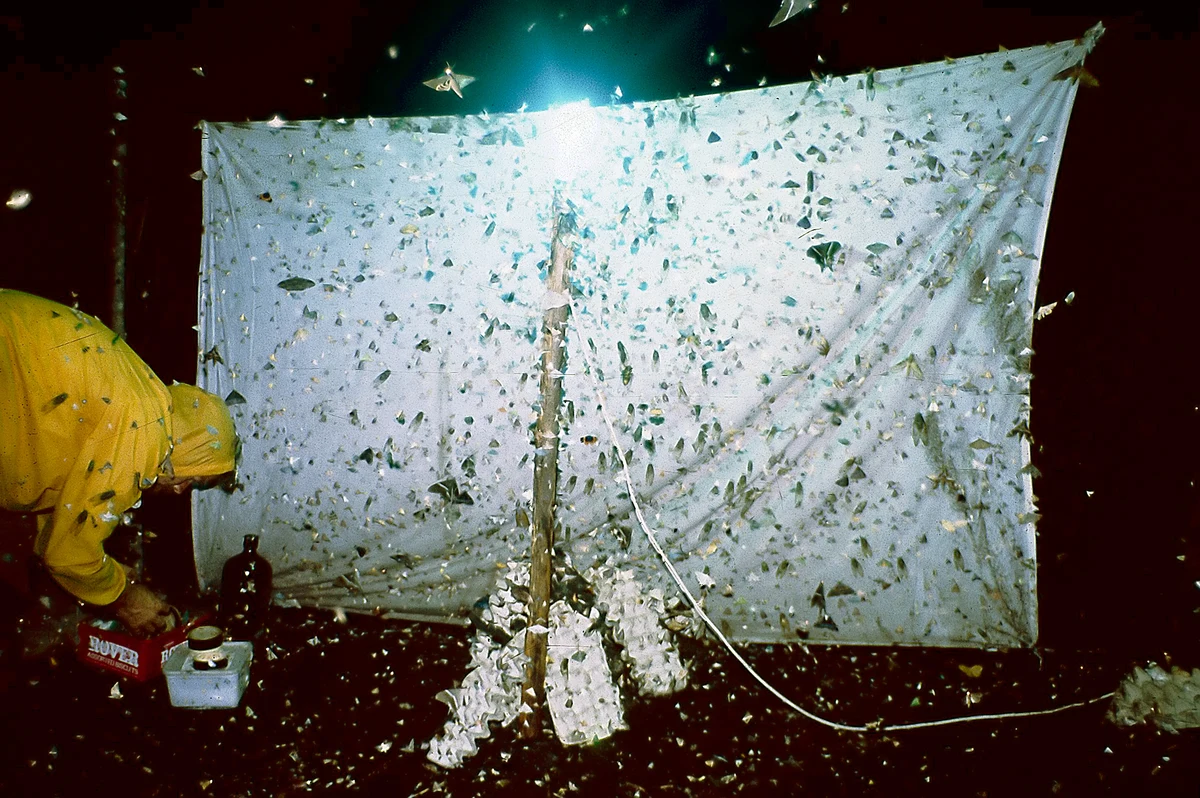
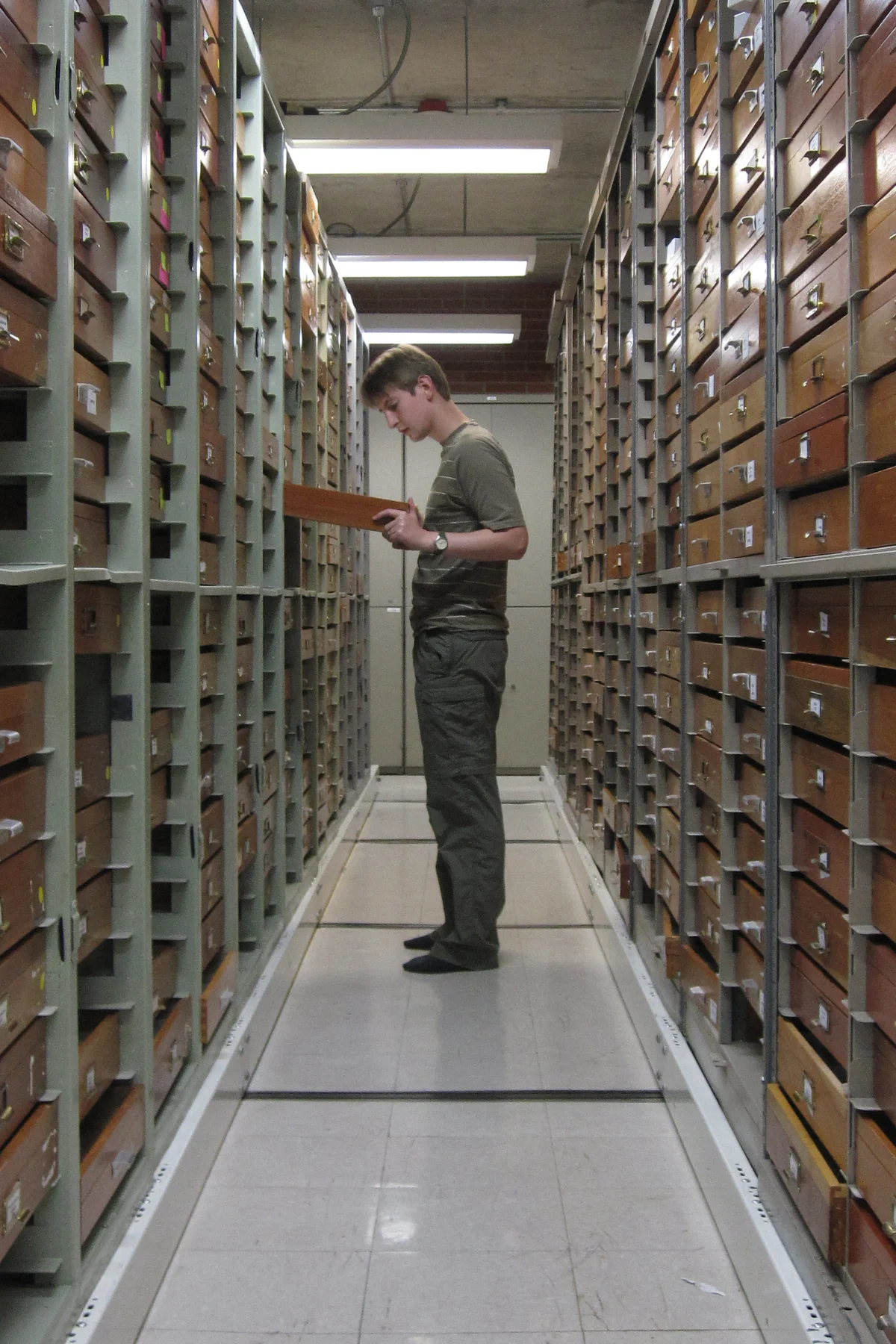
The problem even has an official name. The Convention on Biological Diversity endorsed a Global Taxonomy Initiative in 1996 (Decision III/10), and in 1998 it approved the first actions to develop it, recognising "the lack of taxonomic capacity in a majority of countries" (Decision IV/1; CBD 1998). Its aim is to reduce what the Convention itself calls the "taxonomic impediment" (Fig. 1), that is, the gaps in taxonomic knowledge and the shortage of trained taxonomists and curators (CBD n.d.).
02Are there fewer and fewer taxonomists?
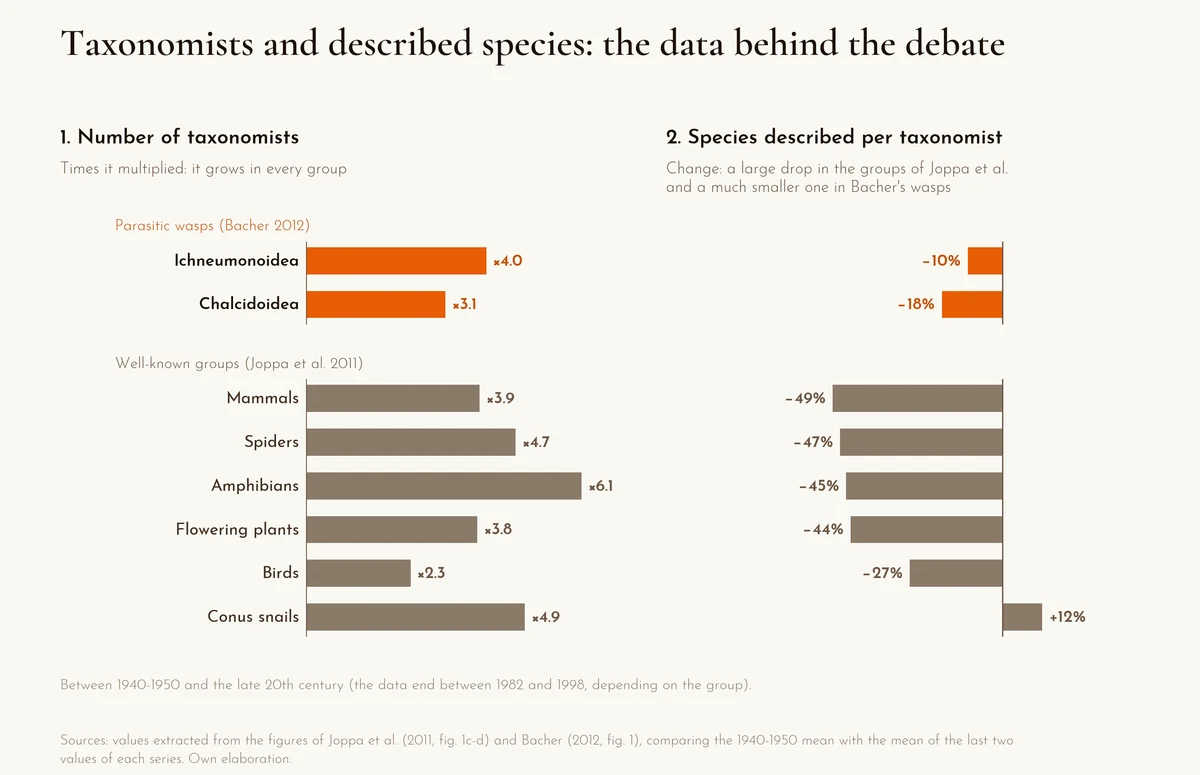
The idea, or the impression, that there are fewer and fewer taxonomists is widespread, but in 2011 Joppa et al. called it into question. Using the data available for six groups (flowering plants, marine snails of the genus Conus, spiders, amphibians, birds and mammals), they counted, in five-year periods, how many people had taken part in describing species from the late 18th century to the late 20th century, and the result was the opposite of what was expected: the number of taxonomists was growing exponentially. Moreover, the rate at which species were described had also increased since 1950, almost exponentially in all groups except birds.
There was, however, an important detail. If, instead of looking at the total, you look at how many species each taxonomist describes, the trend is reversed: in their six groups, each taxonomist was describing fewer and fewer species, and had been doing so for more than a century (Fig. 2). For Joppa et al., in relatively well-known taxonomic groups like theirs, this reflected that fewer and fewer species remained to be discovered, and they even proposed using that decline to estimate how many are missing. With these results, they rejected, to a greater or lesser extent, the idea that taxonomy was in crisis. They did admit, though, that there are signs that people who work exclusively on taxonomy are becoming scarcer.
But Joppa et al. (2011) themselves warned that this pattern might not be general, and that in highly diverse but less well-known groups, probably including groups of insects (they gave beetles and parasitoid wasps as examples), it might be very different. And that is where Bacher (2012) came in, summing up his reply in its very title: "Still not enough taxonomists". Bacher repeated the analysis with the two large superfamilies of parasitoid wasps (Chalcidoidea and Ichneumonoidea), and the first part of the result was the same: the number of taxonomists had been growing roughly exponentially for almost 250 years. The second part, however, was not: the number of species described by each taxonomist showed no sign of decline since at least 1940, far from what happened in the groups studied by Joppa et al. (Fig. 2).
And this changes the picture completely: in these groups, what limits the rate of description is not that the species left to discover are running out, so, according to Bacher, the method of Joppa et al. cannot be used in them to estimate how many remain. Moreover, although taxonomists had been adopting the technical advances of each period, the number of species each of them described had not increased in the previous 60 or 70 years. His conclusion was clear: the fact that taxonomists are not going extinct does not mean that taxonomy is not in crisis. Species need to be described much faster, and that requires more taxonomists.
Interestingly, Joppa et al. (2012) largely agreed with him. In their reply, they acknowledged that Bacher's result matched what had been observed in some groups of plants and in some regions, where there was no clear evidence either that each taxonomist was describing fewer species, and that they too believed more taxonomists were needed. For them, the question was where to concentrate that effort and how to make it more efficient. Their proposal was to focus it on biodiversity hotspots: places under extreme threat, where local taxonomic capacity is limited and where most of the species still to be discovered are probably found.
However, the following year Costello et al. (2013a) returned to the thesis of Joppa et al. (2011) and went even further. If anyone who describes species new to science is considered a taxonomist, they argued, there had never been so many: in recent decades there were two to three times as many as before the 1960s, and their number was growing faster than the number of species described. According to them, their numbers might be falling in some institutions of the countries that traditionally led taxonomy, but the global increase was partly due to the growing number of taxonomists in South America and Asia.
The impression that there were fewer and fewer of them would be explained by the fact that taxonomists tend to become better known when they are close to retirement, and because traditional taxonomy has gradually been diluted among the new specialities of biology. At the Natural History Museum in London, for example, expertise in traditional taxonomy fell by 12% in 15 years and was replaced by specialists in molecular biology, according to a report on taxonomy in the United Kingdom cited by Costello et al. (2013a). Nor did they see evidence that most taxonomists were close to retirement in any country: in 1999, for example, the average age of European marine taxonomists was 47, according to an earlier study cited by the same authors.
That same year, Costello et al. (2013b) reinforced this position with Bacher's own data, which he provided to them himself. They reanalysed them together with data for more than half a million marine, terrestrial and freshwater species. This time they applied statistical tests, and concluded that in parasitoid wasps too the number of species described per author had declined significantly, although the change in trend came much earlier, around 1840. For them, the fact that ever more effort is needed to discover a new species, even though it has never been so easy to explore and sample, indicated that more than half of the planet's species have probably already been described. With this, the debate returned to the starting point of Joppa et al. (2011): if each taxonomist describes fewer species, it is because fewer remain to be discovered. But that reading was soon challenged again.
A debate that remains open
The next objection came from flowering plants. Bebber et al. (2014) found that since 1970 some 1,855 new species had been described per year, an almost constant figure, even though the number of authors had tripled. For them, those extra authors did not mean extra capacity: today papers in all sciences have more authors, and in taxonomy this was because there is more collaboration between teams and because students, technicians and collectors who used to appear only in the acknowledgements now sign as well. So the simplest explanation was not that there were more taxonomists looking for fewer and fewer species, but that the capacity to describe them had not changed. In fact, in six large monographs on flowering plants published during that period, one in four species was new.
Moreover, a long time passes between the collection of a new plant and its description. In a sample of species described between 1970 and 2010, half took some 23-25 years or more to be described after their first specimen was collected, and only about 16% were described within the following five years (Bebber et al. 2010). With all these data, Bebber et al. (2014) concluded that the global capacity to describe flowering plants is stagnant.
Costello et al. (2014), in a reply also signed by Joppa, pointed out that the data of Bebber et al. showed the same as theirs: more and more authors per species described and fewer species per author. The difference lay in the interpretation: for Costello et al., the number of authors was indeed a reasonable indicator of effort, and the increase in the number of taxonomists was not due to papers having more authors. In addition, Bebber et al. themselves estimated that around 25% of flowering plant species still remain to be described, which for Costello et al. fitted their idea that most species already have a name.
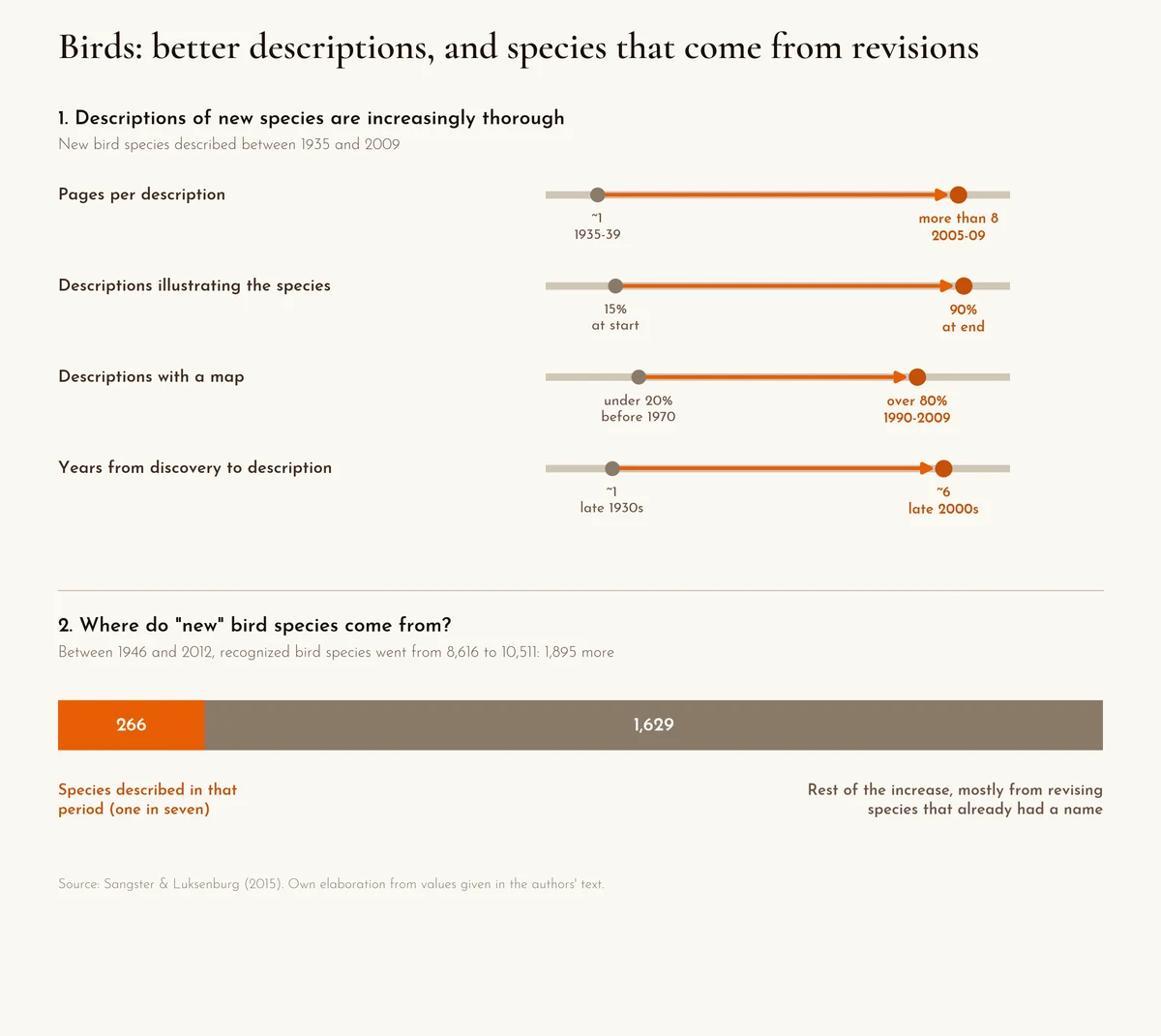
Shortly afterwards came another explanation. Sangster and Luksenburg (2015) pointed out that neither Joppa et al. nor Costello et al. had considered another possibility: that each taxonomist describes fewer species not because few remain to be discovered, but because descriptions are getting better and better. To test this, they analysed the 481 bird taxa described as new species between 1935 and 2009. They chose birds on purpose, because if the species still to be discovered were running out, the effect should show in the best-studied groups more than in any other.
The results were very clear (Fig. 3). The average number of pages per description increased more than eightfold, and the number of specimens examined, of characters and of species the new one was compared with more than doubled. The percentage of descriptions with an illustration of the species rose from 15% to 90%, and the time between the discovery of a species and its description went from about one year to about six. Moreover, more complete descriptions less often required later revisions, so, according to the authors, the efficiency of taxonomy had probably increased. Their conclusion was that, at least in birds, the decline in species described per taxonomist is a side effect of higher-quality taxonomy.
And they added a revealing fact. Between 1946 and 2012, the number of recognised bird species rose from 8,616 to 10,511, that is, 1,895 more, but only 266 of them, one in seven, were new species described during that period. The rest already had names, but had been regarded as subspecies of other species or as invalid names, and came to be recognised as species when they were revised (Fig. 3). In birds, therefore, most "new" species do not come from describing unknown species, but from revising those that are already named.
Poulin and Presswell (2016) found something similar in parasitic helminths: the quality of descriptions had generally increased over time, although unevenly between groups, and, on most measures, the more authors signed a description, the higher its quality. According to them, this points not to more taxonomists, but to more collaborations with experts from other fields, and so they warned that care is needed when using species described per author to estimate how many species exist. Costello et al. (2014), for their part, had already acknowledged that descriptions are now more complete and may take longer, but argued that this could be offset by improvements in fieldwork, in the laboratory and in the way of publishing.
Perhaps, deep down, the question was not the right one. Tancoigne and Dubois (2013) analysed data from the Zoological Record (from 1864 for species and from 1978 for authors and papers, up to 2010) and reached the same conclusion as Joppa et al. and Costello et al.: one cannot speak of a decline, because authors, papers and species described are all growing. But they proposed changing the focus and speaking of insufficiency with respect to the goal of taxonomy, which is to inventory and classify all living things on the planet.
That overall growth, moreover, does not occur in all groups. In Diptera, a huge and still poorly studied order, Cerretti et al. (2025) found the opposite: a persistent decline in the number of species described since the late 1990s. At that rate, it would take centuries to describe even the well-studied groups, which are only a fraction of the Diptera, and the authors believe that many other insect orders are in the same situation, partly because of the insufficient number of taxonomic experts.
Unevenly distributed
Moreover, the effort is very unevenly distributed. Groom et al. (2026) identified more than 31,000 people linked to European institutions who signed taxonomic publications between 2014 and 2023. That may seem a lot, but the effort is concentrated on vascular plants, vertebrates and insects, and is scarce for non-insect aquatic invertebrates and many groups of fungi.
In the megadiverse developing countries of the tropics, home to much of the planet's species diversity, the lack of taxonomists is compounded by the lack of well-maintained collections, which according to Paknia et al. (2015) is the main bottleneck for exploring their biodiversity. They summed it up in the title of their paper: "Lack of well-maintained natural history collections and taxonomists in megadiverse developing countries hampers global biodiversity exploration".
A study of land snails and slugs described worldwide between 2003 and 2022 shows something similar. Its authors group countries into the Global North and the Global South; the latter includes Latin America, Africa and most of Asia and the Pacific. More than half of the species from the Global South (51.4%) were described without any researcher based in the Global South (Abreu et al. 2025).
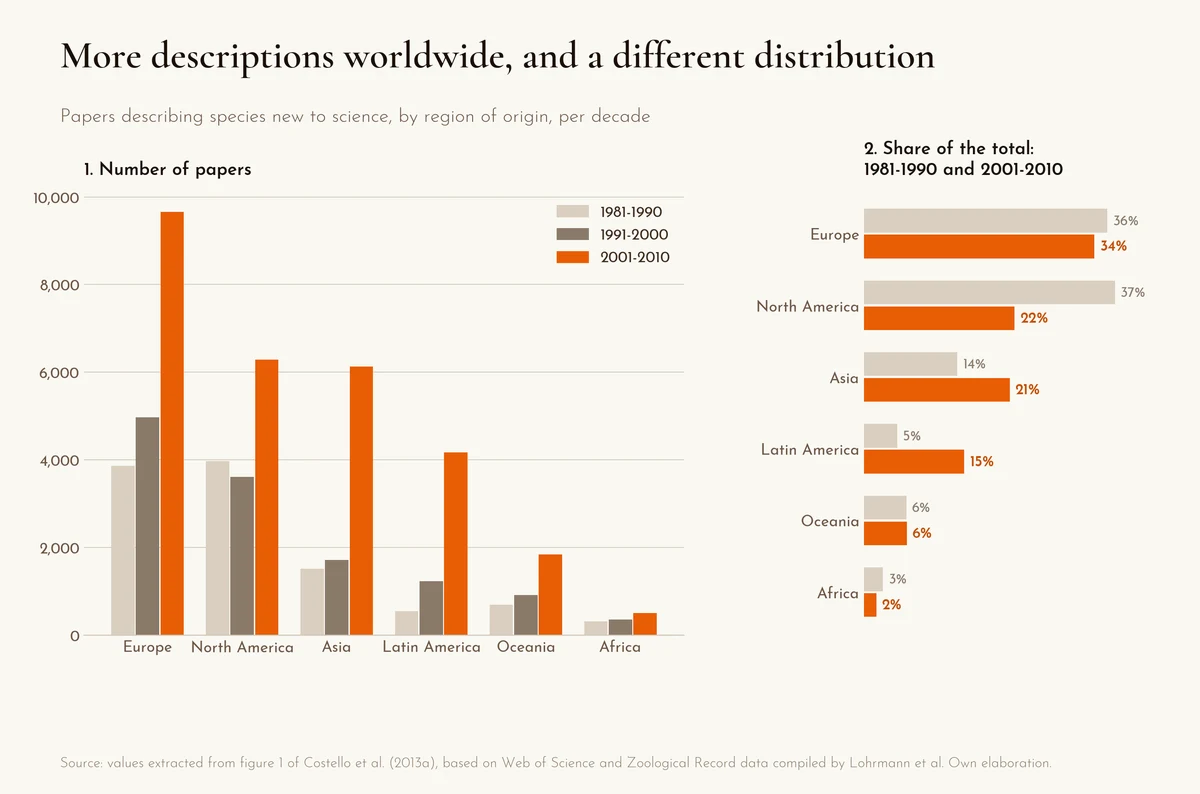
There is, however, an encouraging fact. According to the data of Lohrmann et al. (2012, cited in Costello et al. 2013a), between 1981-1990 and 2001-2010 the number of papers describing new species increased in all regions of the world, although not equally: North America's share of the total fell from 37% to 22%, while Asia's rose from 14% to 21% and Latin America's from 5% to 15%; Africa's share, by contrast, remained minimal (Fig. 4). These are the data on which Costello et al. based their claim that the number of taxonomists was growing in South America and Asia, although neither Costello et al. nor their figure explain how each paper was assigned to a region.
Studies focusing on particular groups point in the same direction. In the mayflies (Ephemeroptera) of South America, almost all species were described by European and North American authors until the 1970s; in the 1980s and 1990s authors from the region began to join in, and since 1999 they have described most of them. The authors suggest that funding and collaboration between researchers drove this change (Domínguez & Dos Santos 2014).
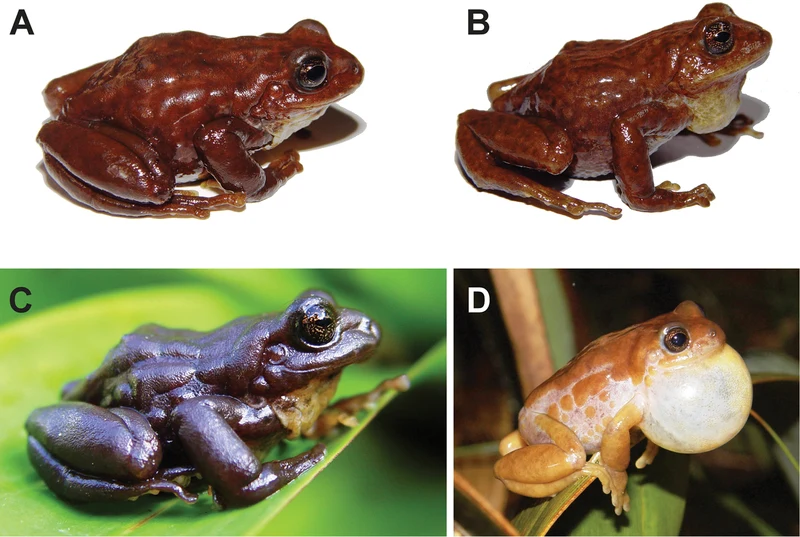
In frogs of the genus Pristimantis (Fig. 5), one of the most diverse groups of vertebrates, Latin American researchers have been gaining ground since the 1990s, and the largest group of authors who have taken part in their descriptions is Ecuadorians (21%), followed by US and Colombian researchers (Reyes-Puig & Mancero 2022). And among the papers published in 2006 and 2007 in the megajournal Zootaxa, devoted to zoological taxonomy, South America (together with Central America) was already the second region with the most signing taxonomists, behind only Europe, and its taxonomists, like those in Asia, were younger and worked mainly at universities, not museums (Tancoigne et al. 2011).
But the change is not the same in all countries. In Chile, 90.5% of the 1,121 authors who have described its native vascular plants and vertebrates are foreigners, and they described 75% of those plants and 91% of those vertebrates, although in recent decades the participation of Chilean authors has grown steadily (Castro et al. 2026). The fact that taxonomists from these regions are increasingly numerous does not contradict that they are still too few: they start from very little, they are concentrated in a few countries (in Zootaxa, Brazil accounted for 61% of South American taxonomists; Tancoigne et al. 2011) and, in many groups and countries, most species are still described by researchers from elsewhere.
So, according to the studies reviewed, the answer to the question of this chapter is no: today more people than ever are describing species. That is why Tancoigne and Dubois (2013) proposed changing the question: not whether there are fewer taxonomists, but whether there are enough. And although Costello et al. dispute it, much of the work reviewed holds that there are not, and that, moreover, they are not where they are most needed. It should also be borne in mind that most of these studies measure taxonomists by the species they describe or by what they publish, and leave out much of their work, such as identifying specimens or revising species already described, which is precisely what the cases in the first part showed. That is why the next step is to look at the conditions they work in and whether they can make a living from it.
03Why it is hard to make a career in taxonomy
Is there a lack of interest in taxonomy, a lack of incentives or too many obstacles? I have not found any study that measures students' interest in taxonomy, but the literature does show fairly clearly that working in it professionally is becoming harder and harder. Britz et al. (2020) identify the three major challenges of the discipline: funding, training and permits.
Few positions and little money
The first two challenges go hand in hand, because without money there are no positions, and without positions there is no new generation. Löbl et al. (2023) point out that financial support for taxonomic projects has declined at least since the 1990s in England and the United States, and consider that the underlying problem is the low and decreasing number of permanent positions for taxonomists, which are the ones that make revisions and multi-year projects possible.
The best-documented case I have found is Canada. Between 1991 and 2007, the funds that the main Canadian public agency funding the natural sciences (NSERC) devoted to taxonomic research through one of its committees fell by 55% in real terms, and in 2000 the Canadian National Collection of Insects and Arachnids had almost half as many entomologists as in 1980. Between 1980 and 2000, new species described by Canada-based researchers in three of the country's leading journals fell by 74%, while those described by authors from other countries in the same journals did not decline in a similar way (Packer et al. 2009).
Metrics that do not measure taxonomy
On top of all this comes the way scientists are evaluated. At universities that focus on research rather than teaching, success is measured above all by large funded projects, publications in high-impact-factor journals and prestige for the institution, and disciplines that cannot compete on those terms tend to be sidelined in decisions about hiring, promotion, courses and programmes (Tewksbury et al. 2014).
A journal's impact factor is, put simply, the average number of citations received in a given year by the papers it published in the two previous years (Garfield 2006). It was created to select and compare journals, and its own creator warned that it should not be used to evaluate papers or authors, but in many countries it has become the main measure of the research quality of universities and institutes, and researchers' promotions, prestige and funding are perceived to depend largely on it (Pinto et al. 2021; Löbl et al. 2023).
Taxonomy has a particularly hard time. Very old works are still cited in it (in a few large monographs, the average age of the references cited was 61 years; Krell 2002, cited in Löbl et al. 2023), but, as we have just seen, the impact factor only counts citations from the first two years after publication. In marine molluscs, 78% of the new species described between 2000 and 2014 were published in books or journals without an impact factor (Bouchet et al. 2016), and Zootaxa itself lost its impact factor in 2020 because of its unusually high proportion of self-citations, although, after a strong reaction from the taxonomic community, Clarivate reviewed the decision and the journal regained it shortly afterwards (Pinto et al. 2021). And in the only study I have found that has tested it, on fungi, the journals with the highest impact factor were not the ones that contributed most to discovering new fungal lineages, detected from DNA sequences: many first appeared in journals with a low impact factor, or even none, and the highest-impact journals often only picked them up later (Nilsson et al. 2024).
More than 25 years ago, Krell (2000) warned in Nature that the impact factor is not a relevant measure for taxonomy, and Löbl et al. (2023) go as far as proposing to abandon journal-based metrics for evaluating researchers. In practice, because taxonomic revisions take years of work before they are published, a taxonomist competing for a university position with ecologists or evolutionary biologists starts at a disadvantage (Packer et al. 2009). Löbl et al. sum it up with a question: which biologist starting out on a career will devote years to a revision only to end up with few publications on their CV and difficulty finding a stable post?
Who teaches taxonomy?
If taxonomy has hardly any positions and scores poorly, it is no surprise that it is also losing ground in training, although I have found hardly any data on how much taxonomy is actually taught. Löbl et al. (2023) argue that many, if not most, universities neglect it in their curricula: there are very few teachers of taxonomy compared with other branches of biology that depend on it, it is rarely taught and it is not usually accepted as a PhD topic. They also describe an erosion of taxonomic knowledge and teaching that has been going on for a long time at universities in Germany, Switzerland and Austria. In Hungary, most of the specialists interviewed in less popular groups (26 of 42) began working on them at the suggestion of a teacher or an influential colleague at their university, museum or research institute, a group of mentors that, according to the authors, is shrinking (Páll-Gergely et al. 2024).
An indirect sign of this shortfall is the declining weight of natural history in university education. Tewksbury et al. (2014) understand natural history as the observation and description of the natural world, with organisms and their relationships with the environment as the central focus, a broader field that in their analysis includes taxonomy and systematics.
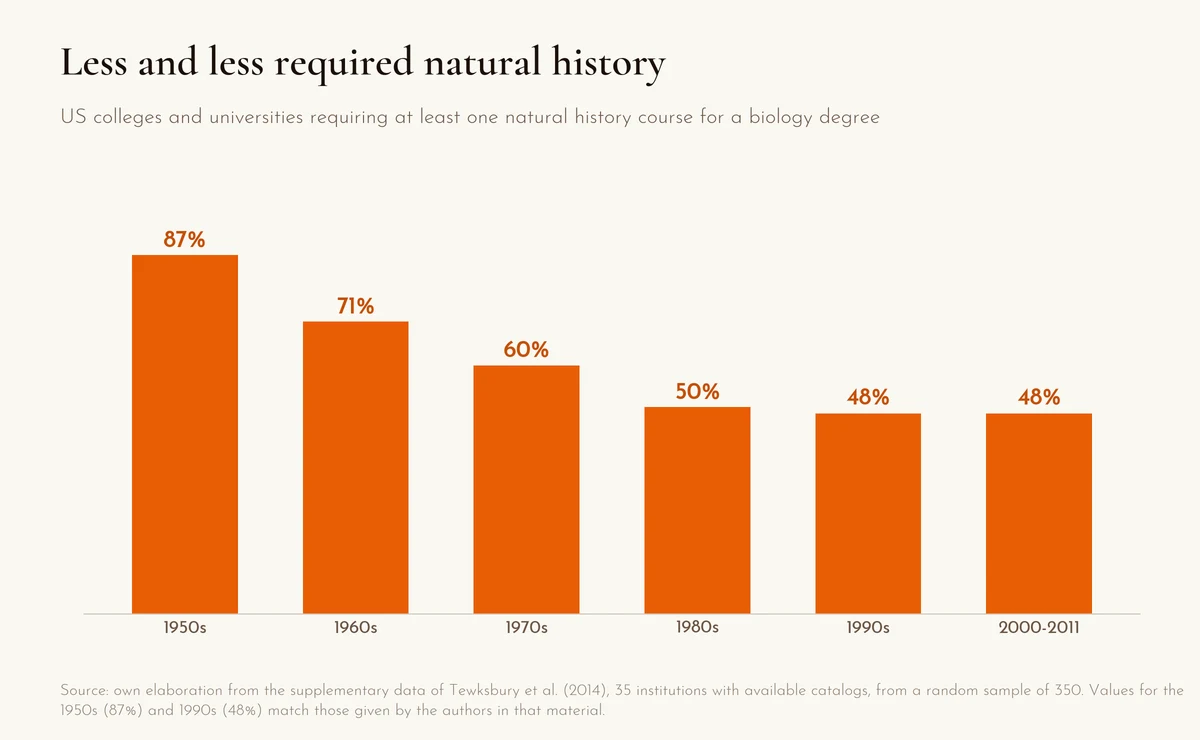
The most complete data I have found come from the United States. These authors reviewed the curricula of 35 universities and colleges, selected from 350 chosen at random according to the availability of their catalogues, and analysed the minimum number of natural history courses required to obtain a degree in Biology. According to their supplementary material, in the 1950s 87% required at least one; in the 1990s, only 48% (Fig. 6). Many still offered them, but as electives.
In introductory biology textbooks, the share devoted to natural history (anatomy, diversity and taxonomy, evolution, ecology and behaviour) fell from 65% before 1955 to 39% after 1985, not because fewer pages were devoted to it, but because the books included more and more content on molecular and cell biology and physiology. In addition, the proportion of PhDs in biological disciplines related to natural history declined steadily between 1960 and 1995 (Tewksbury et al. 2014).
These data do not directly measure training in taxonomy, but they do show an educational context in which content centred on organisms and their diversity has been losing ground to other areas of biology.
No new generation
The most serious consequence of all this is the lack of a new generation. It may seem to contradict what we saw in chapter 02, where the number of people describing species kept growing, but signing a description is not the same as working in taxonomy. As Bebber et al. (2014) already pointed out, students, technicians and collectors now sign too, and Poulin and Presswell (2016, cited in Poulin & Presswell 2022) note that many authors take part in only a few descriptions over two or three years, so they are probably graduate students or occasional collaborators, not dedicated taxonomists.
What is scarce, and ageing, is those specialists. In a worldwide survey of 634 taxonomists, more than half were established or late-career researchers, and there were few early-career researchers and graduate students (Salvador et al. 2022). In parasitic helminths of fish, in a representative sample of more than 2,000 species described between 2000 and 2021 in eight parasitology journals, the vast majority were described by a small group of very productive taxonomists, practically the same ones from one decade to the next. On average, the 42 most prolific published their first description 30 years before 2021, so many of them are already in the last stage of their careers (Poulin & Presswell 2022).
In many countries and groups, moreover, there is hardly anyone left who can identify the species. In botany, a worldwide survey found that, according to its participants, in 48% of the 89 countries included there are fewer than ten active plant taxonomists, with Colombia and Venezuela among those facing the greatest constraints (Simões et al. 2026).
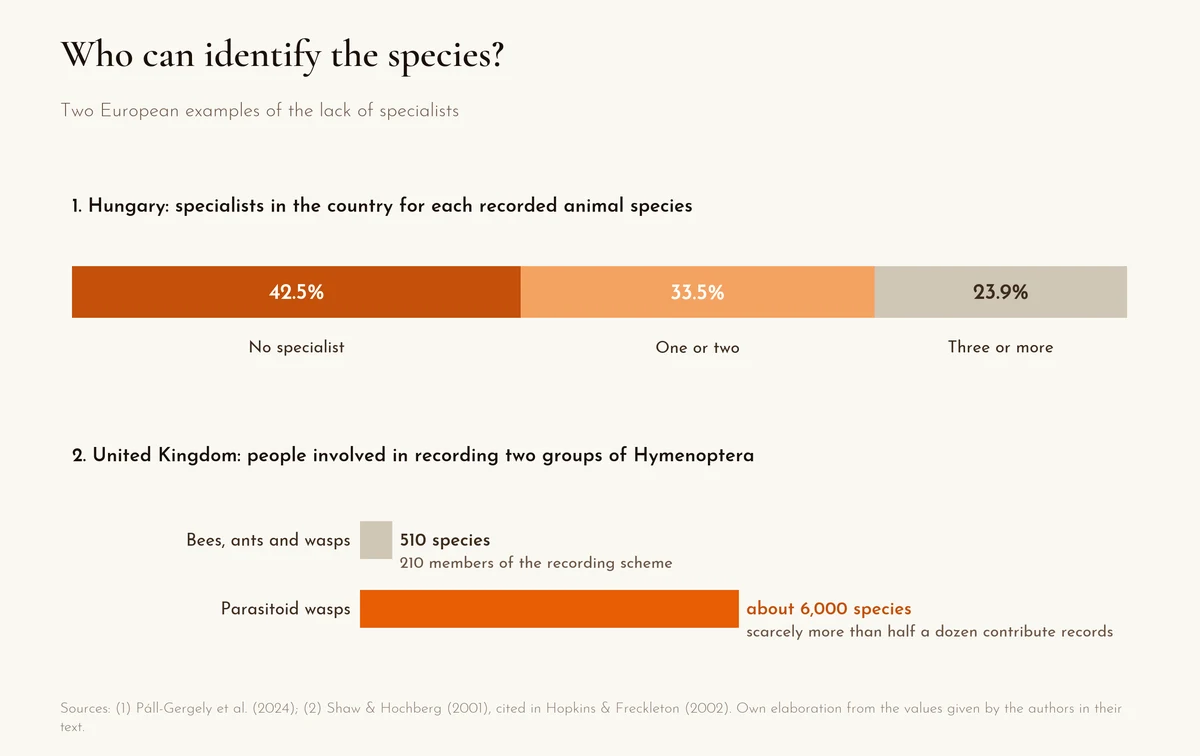
In Hungary, a European country with a long taxonomic tradition, Páll-Gergely et al. (2024) estimate that there is no specialist at all for 42.5% of the animal species recorded in the country, and for another 33.5% there are only one or two, who have often left academia, are close to retirement or have already retired. Only 23.9% of the fauna has three or more specialists (Fig. 7). Moreover, the number of actively publishing invertebrate experts and of faunistic papers (those documenting which species live in each place) went through a golden era that the authors place roughly between 1990-1995 and 2010, but in the last decade they have fallen to the level of the 1970s. In a survey by the same authors, experts who were producing less data than before attributed it mainly to other duties, lack of support from their institution and pressure to publish.
In the United Kingdom, while the recording scheme for the 510 species of bees, ants and wasps has 210 members, barely more than half a dozen people contribute data on the roughly 6,000 species of parasitoid Hymenoptera, which only someone with taxonomic knowledge can identify (Shaw & Hochberg 2001, cited in Hopkins & Freckleton 2002; Figs. 7 and 8).
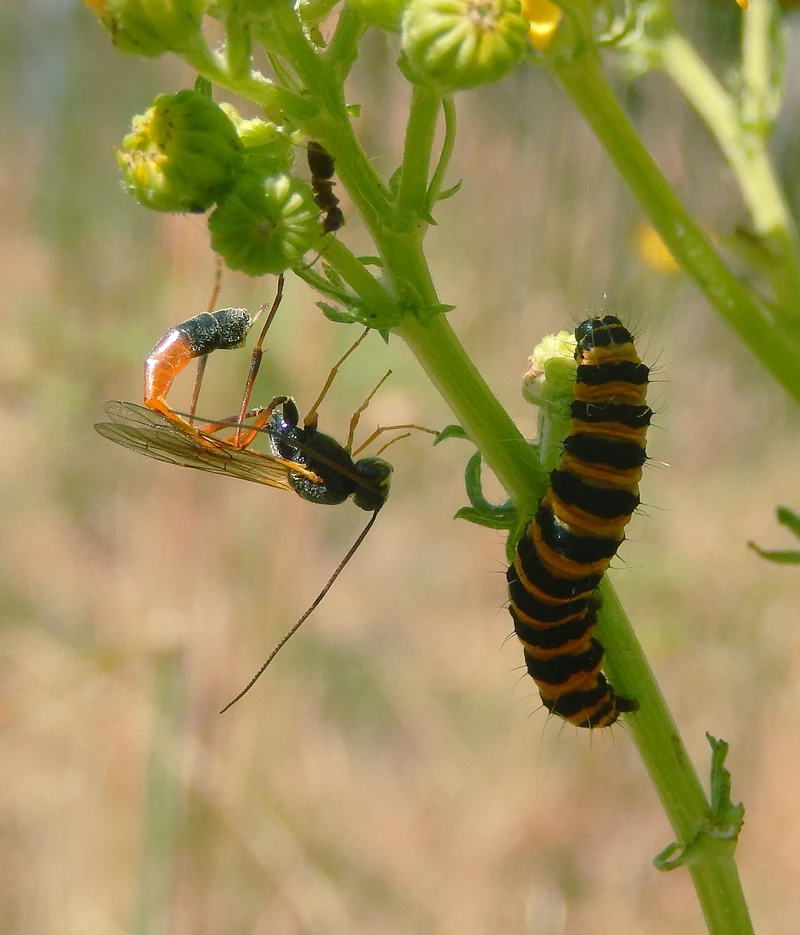
And in some groups there is not even anyone to replace: many families of marine molluscs have not been revised for 100 years or more and have no specialist anywhere in the world because, according to the authors, no research funding agency will support the revision of a large group if it is not hypothesis-driven, does not answer "big questions" or lacks a significant "broader context" (Bouchet et al. 2016).
Permits and collections
To collect and study biodiversity within a scientific project, in the vast majority of countries permits are now needed, both to collect in the field and for the scientific use of what is collected (Britz et al. 2020). It is a subject that would deserve an article of its own but, very briefly: first, anyone wishing to collect needs the backing of a university or a museum, as staff or as a research associate. With that backing, a collaborative project is agreed with a researcher at an institution in the country where sampling will take place, and the project is submitted to the competent ministry. If it is approved, collecting permits can be requested: in some countries a single national permit is enough, but in others each region or province requires its own. Some also require movement permits to transport samples between regions or provinces. If the samples leave the country, an export permit is needed, and to extract DNA or carry out any other molecular analysis, a permit for access to genetic resources.
Paradoxically, many of these obstacles stem from rules created to protect biodiversity. The Convention on Biological Diversity, signed in 1992, now has 196 Parties, and its Nagoya Protocol, adopted in 2010, has 143 (CBD 2026). Among the objectives of the Convention, alongside the conservation and sustainable use of biodiversity, is ensuring the fair and equitable sharing of the benefits arising from genetic resources, which is the specific object of the Nagoya Protocol. But, according to Prathapan et al. (2018), the national laws derived from the Convention, for fear of biopiracy, are holding back taxonomic studies, and in doing so they weaken the first objective of the Convention itself, conservation, because conserving species requires knowing them. They summed it up in the title of their paper: "When the cure kills". Meanwhile, the commercial benefits expected from genetic resources have been exaggerated and have barely materialised (Prathapan et al. 2018). Several works denounce increasingly complex procedures that hinder taxonomic work and international collaboration (Neumann et al. 2018; Britz et al. 2020). Moreover, the laws regulating the use of genetic resources do not usually distinguish between basic and commercial research (Neumann et al. 2018), and in Brazil more than 1,200 researchers asked the Ministry of the Environment to differentiate taxonomic studies from commercial research (Prathapan et al. 2018).
The consequences are concrete. Britz et al. (2020) consider that, with current legislation, the taxonomic and phylogeographic study of many widely distributed taxa has become practically impossible. In Argentina, according to Acosta and Pérez-González (2019), the tangle of procedures for sending material abroad has led some taxonomists to stop requesting specimens on loan from institutions abroad. This can reduce the quality of the work and limit taxonomy to a local or, at most, regional scope.
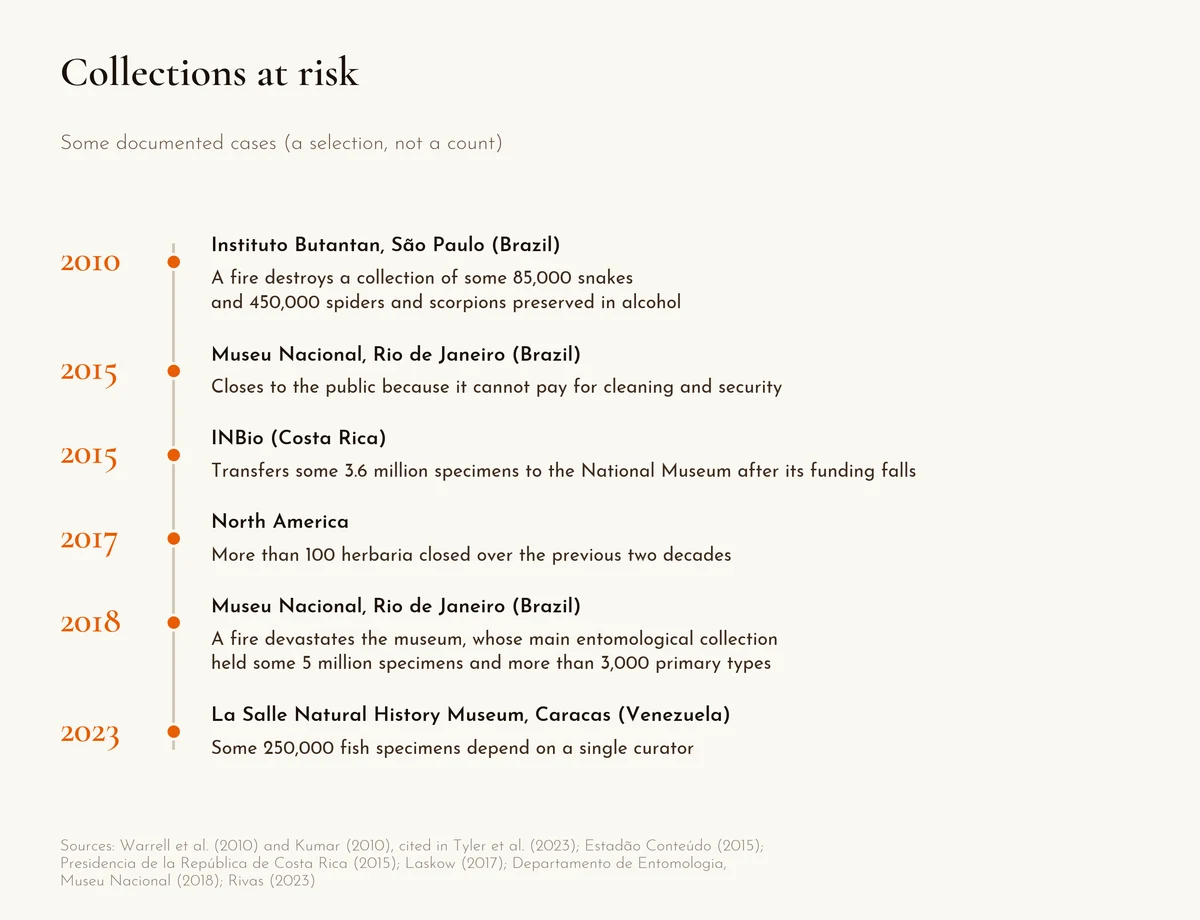
On top of this comes the fragility of natural history collections. They hold the type specimens, which give meaning to each name, but not only that. As we saw in the first part, many still undescribed species are already in their drawers. And material that has already been collected has great potential for new research without the need to sacrifice more specimens (Byrne 2023). On 2 September 2018 it became clear how fragile they are, when a fire destroyed the Museu Nacional in Rio de Janeiro (Fig. 9). Its main entomological collection, of some five million specimens, included more than 3,000 primary types. Only part of the Diptera collection, housed in an annexe, and the material on loan to other institutions were saved (Departamento de Entomologia, Museu Nacional 2018).

The Museu Nacional had already been struggling with funding. In 2015 it had to close to the public because it could not pay for cleaning and security services (Estadão Conteúdo 2015), and between 2013 and 2017 its budget fell from about 130,000 to about 84,000 dollars. The building was known to be vulnerable to fire, and funding for a renovation that included upgrading the fire prevention system had been approved shortly before (Associated Press 2018). Tyler et al. (2023) note that the loss has been attributed to years of underfunding, and that the building had no hoses, sprinklers or fire doors.
This is not an isolated case (Fig. 10). Tyler et al. (2023) document the destruction of or damage to collections in 57 institutions in 30 countries for various reasons, including fires, floods, thefts or economic problems. Among them is the Instituto Butantan in São Paulo, where in 2010 a fire destroyed a collection of some 85,000 snakes and 450,000 spiders and scorpions preserved in alcohol, in a building with no fire alarm or sprinklers (Warrell et al. 2010 and Kumar 2010, cited in Tyler et al. 2023). On top of disasters come cuts in funding and staff, with examples in museums in Europe, North America and South America (Dupérré 2020). In North America more than 100 herbaria have closed in two decades (Laskow 2017). In Caracas, the fish collection of the La Salle Natural History Museum, with some 250,000 specimens, depends on a single curator, and the alcohol in some jars has evaporated with no means to replace it (Rivas 2023). And in Costa Rica, the National Biodiversity Institute (INBio), which had assembled some 3.6 million specimens over 25 years, had to transfer them to the National Museum in 2015 because, after a sharp fall in international cooperation funding, it was no longer in a position to keep developing and curating them (Presidencia de la República de Costa Rica 2015).
In addition, collections are no longer growing at the pace they used to. One analysis reviewed more than 150 million specimen records from collections around the world, published on the GBIF platform. The number of specimens recorded per year of collection has fallen sharply: between 2010 and 2019 it was, on average, 47% lower than in the peak five-year period for chordates, the group that includes vertebrates (1964-1968), and 43% lower for plants (1980-1984). In arthropods the peak is more recent, and between 2015 and 2019 the decline was 27%, although the authors warn that delays in cataloguing specimens and adding them to databases may play a larger role in them. One might think that less is collected because there is already enough: the world's collections hold between 2 and 4 billion specimens. But, according to the authors, their value depends on their continuing to grow, across all groups, all regions and over time, because only then can they help us understand past and present changes and predict future ones. Among the possible causes of the decline, the authors point to scarce funding, rising costs and increasingly complex permitting. Moreover, as less is collected, fewer and fewer people are trained in collecting, curation and basic taxonomy. And they warn that this decline threatens to limit the data that modern tools, such as artificial intelligence, need for training (Forbes et al. 2025).
The missing pieces
Some important questions, as far as I have been able to check, still lack a clear answer. There appear to be hardly any data series on positions or funding for taxonomy outside cases such as Canada. Several of the studies I have cited point to a lack of resources, but I have not found any that directly tests whether the decline in species described per taxonomist is partly due to it: Costello et al. (2013b) acknowledge that they know of no quantitative data measuring changes in the productivity or efficiency of individual taxonomists, and Grieneisen et al. (2014) could not include in their global analysis either funding for taxonomy or the number of active taxonomists in each country, for lack of data.
04Conclusions
Are we short of taxonomists? The studies reviewed do not give a single answer. Today more people than ever are signing descriptions of species, but several authors argue that they are not enough, both because not all of them actually work in taxonomy and because, at the current rate, describing the species that remain would take an extremely long time. The effort is very unevenly distributed between groups and regions, and it is becoming harder and harder to work in taxonomy professionally. As possible causes, the literature points above all to structural factors: few positions and little funding, evaluation systems that give little credit to taxonomic work, training in which taxonomy and natural history have lost ground, and increasingly complex procedures for collecting and studying specimens. As far as I have been able to find, no study has directly measured the weight of each of these factors. Collections, moreover, are growing more slowly than before and are suffering cuts in funding and staff. And in some groups knowledge seems to depend on a few specialists with no one to take over.
If specialists are lacking, it is worth asking what consequences this has in practice: are misidentifications common? And, if they are, couldn't DNA analyses, artificial intelligence or other new techniques make up for that shortage of taxonomists? If not, what has worked and what would be needed to get out of this situation? That is the subject of the third part.
References
Show all 62 references
- Abreu, E.C.T., da Silva, E.L. & Moura, M.R. (2025). Geopolitical impacts on the description of new terrestrial mollusc species. Proceedings of the Royal Society B, 292, 20251428. https://doi.org/10.1098/rspb.2025.1428
- Acosta, L.E. & Pérez-González, A. (2019). ¿Quién va a describir nuestra biodiversidad?: el impedimento taxonómico frente al Protocolo de Nagoya y las normativas vigentes. Revista del Museo Argentino de Ciencias Naturales, 21(1), 17–27. https://doi.org/10.22179/REVMACN.21.629
- Associated Press (2018). Brazilians see metaphor for their struggles in museum fire. FOX 10 Phoenix, 3 September 2018. https://www.fox10phoenix.com/news/brazilians-see-metaphor-for-their-struggles-in-museum-fire
- Bacher, S. (2012). Still not enough taxonomists: reply to Joppa et al. Trends in Ecology & Evolution, 27(2), 65–66. https://doi.org/10.1016/j.tree.2011.11.003
- Bebber, D.P., Carine, M.A., Wood, J.R.I., Wortley, A.H., Harris, D.J., Prance, G.T., Davidse, G., Paige, J., Pennington, T.D., Robson, N.K.B. & Scotland, R.W. (2010). Herbaria are a major frontier for species discovery. Proceedings of the National Academy of Sciences, 107(51), 22169–22171. https://doi.org/10.1073/pnas.1011841108
- Bebber, D.P., Wood, J.R.I., Barker, C. & Scotland, R.W. (2014). Author inflation masks global capacity for species discovery in flowering plants. New Phytologist, 201(2), 700–706. https://doi.org/10.1111/nph.12522
- Bouchet, P., Bary, S., Héros, V. & Marani, G. (2016). How many species of molluscs are there in the world's oceans, and who is going to describe them? In: Héros, V., Strong, E. & Bouchet, P. (eds.), Tropical Deep-Sea Benthos 29. Mémoires du Muséum national d'Histoire naturelle, 208, 9–24. Muséum national d'Histoire naturelle, Paris.
- Britz, R., Hundsdörfer, A. & Fritz, U. (2020). Funding, training, permits: the three big challenges of taxonomy. Megataxa, 1(1), 49–52. https://doi.org/10.11646/megataxa.1.1.10
- Byrne, A.Q. (2023). Reimagining the future of natural history museums with compassionate collection. PLOS Biology, 21(5), e3002101. https://doi.org/10.1371/journal.pbio.3002101
- Castro, S.A., Canto, J., Jaksic, F.M. & Pefaur, J.E. (2026). Construction of the national inventory of Chilean flora and fauna (Who is who in) the construction of the national inventory of vascular plants and vertebrates of Chile: historical patterns, productivity, and national contribution. Biodiversity and Conservation, 35, 58. https://doi.org/10.1007/s10531-026-03260-9
- CBD, Convention on Biological Diversity (1998). Decision IV/1. Fourth meeting of the Conference of the Parties, Bratislava.
- CBD, Convention on Biological Diversity (2026). List of Parties. https://www.cbd.int/parties (accessed 1 October 2026).
- CBD, Convention on Biological Diversity (n.d.). Global Taxonomy Initiative: the problem. https://www.cbd.int/gti/problem.shtml (accessed 2 October 2026).
- Cerretti, P., Nania, D., Di Marco, M., Meier, R., Ascenzi, A., Evenhuis, N. & Pape, T. (2025). Declining rates of species description call for improved taxonomic strategies: insights from a megadiverse insect order. Systematic Entomology, 51(1), e70019. https://doi.org/10.1111/syen.70019
- Costello, M.J., Houlding, B. & Joppa, L.N. (2014). Further evidence of more taxonomists discovering new species, and that most species have been named: response to Bebber et al. (2014). New Phytologist, 202, 739–740. https://doi.org/10.1111/nph.12689
- Costello, M.J., May, R.M. & Stork, N.E. (2013a). Can we name Earth's species before they go extinct? Science, 339(6118), 413–416. https://doi.org/10.1126/science.1230318
- Costello, M.J., Wilson, S. & Houlding, B. (2013b). More taxonomists describing significantly fewer species per unit effort may indicate that most species have been discovered. Systematic Biology, 62(4), 616–624. https://doi.org/10.1093/sysbio/syt024
- Departamento de Entomologia, Museu Nacional / UFRJ (2018). Official announcement from the Department of Entomology (Museu Nacional). https://www.museunacional.ufrj.br/entomologia/docs/Official%20announcement%20Departament%20of%20Entomology-Museu%20Nacional.pdf
- Domínguez, E. & Dos Santos, D.A. (2014). Co-authorship networks (and other contextual factors) behind the growth of taxonomy of South American Ephemeroptera: a scientometric approach. Zootaxa, 3754(1), 59–85. https://doi.org/10.11646/zootaxa.3754.1.3
- Dupérré, N. (2020). Old and new challenges in taxonomy: what are taxonomists up against? Megataxa, 1(1), 59–62. https://doi.org/10.11646/megataxa.1.1.12
- Estadão Conteúdo (2015). Museu Nacional, o mais antigo do Brasil, fecha por falta de dinheiro. Gazeta do Povo, 12 January 2015. https://www.gazetadopovo.com.br/vida-e-cidadania/museu-nacional-o-mais-antigo-do-brasil-fecha-por-falta-de-dinheiro-eis6y5h6cxff3vbhoxmgkn68e/
- Forbes, O., Young, A.G. & Thrall, P.H. (2025). Global sampling decline erodes science potential of natural history collections. Nature Communications, 16, 9255. https://doi.org/10.1038/s41467-025-64303-3
- Garfield, E. (2006). The history and meaning of the journal impact factor. JAMA, 295(1), 90–93. https://doi.org/10.1001/jama.295.1.90
- Grieneisen, M.L., Zhan, Y., Potter, D. & Zhang, M. (2014). Biodiversity, taxonomic infrastructure, international collaboration, and new species discovery. BioScience, 64(4), 322–332. https://doi.org/10.1093/biosci/biu035
- Groom, Q.J., De Nolf, M., Estupinan-Suarez, L.M. & Meeus, S. (2026). Balancing the supply and demand for taxonomy: An analysis of European taxonomic capacity and policy needs. PLOS ONE, 21(4), e0347332. https://doi.org/10.1371/journal.pone.0347332
- Hopkins, G.W. & Freckleton, R.P. (2002). Declines in the numbers of amateur and professional taxonomists: implications for conservation. Animal Conservation, 5(3), 245–249. https://doi.org/10.1017/S1367943002002299
- IPBES (2019). Summary for policymakers of the global assessment report on biodiversity and ecosystem services. Díaz, S. et al. (eds.). IPBES Secretariat, Bonn. https://doi.org/10.5281/zenodo.3553579
- IPBES (2023). Summary for policymakers of the thematic assessment report on invasive alien species and their control. Roy, H.E., Pauchard, A., Stoett, P., Renard Truong, T. et al. (eds.). IPBES Secretariat, Bonn. https://doi.org/10.5281/zenodo.11254974
- IPCC (2022). Summary for policymakers. In: Pörtner, H.-O. et al. (eds.), Climate Change 2022: Impacts, Adaptation and Vulnerability. Contribution of Working Group II to the Sixth Assessment Report of the Intergovernmental Panel on Climate Change. Cambridge University Press, Cambridge y Nueva York, 3–33.
- Joppa, L.N., Roberts, D.L. & Pimm, S.L. (2011). The population ecology and social behaviour of taxonomists. Trends in Ecology & Evolution, 26(11), 551–553. https://doi.org/10.1016/j.tree.2011.07.010
- Joppa, L.N., Roberts, D.L. & Pimm, S.L. (2012). Taxonomy that matters: response to Bacher. Trends in Ecology & Evolution, 27(2), 66. https://doi.org/10.1016/j.tree.2011.11.015
- Krell, F.-T. (2000). Impact factors aren't relevant to taxonomy. Nature, 405, 507–508. https://doi.org/10.1038/35014664
- Krell, F.-T. (2002). Why impact factors don't work for taxonomy. Nature, 415, 957. https://doi.org/10.1038/415957a
- Kumar, A. (2010). A tragic loss: fire at Instituto Butantan, Brazil. Toxicon, 56(8), 1528–1529. https://doi.org/10.1016/j.toxicon.2010.07.002
- Laskow, S. (2017). It’s hard to be a natural history museum in the 21st century. Atlas Obscura, 16 May 2017. https://www.atlasobscura.com/articles/natural-history-museums-closing-survival-modernizing
- Löbl, I., Klausnitzer, B., Hartmann, M. & Krell, F.-T. (2023). The silent extinction of species and taxonomists: an appeal to science policymakers and legislators. Diversity, 15(10), 1053. https://doi.org/10.3390/d15101053
- Lohrmann, V., Vohland, K., Ohl, M. & Häuser, C. (2012). Taxonomische Forschung in Deutschland: Eine Übersichtsstudie. Berlin: Museum für Naturkunde.
- Neumann, D., Borisenko, A.V., Coddington, J.A., et al. (2018). Global biodiversity research tied up by juridical interpretations of access and benefit sharing. Organisms Diversity & Evolution, 18, 1–12. https://doi.org/10.1007/s13127-017-0347-1
- Nilsson, R.H., Jansson, A.T., Wurzbacher, C., et al. (2024). 20 years of bibliometric data illustrates a lack of concordance between journal impact factor and fungal species discovery in systematic mycology. MycoKeys, 110, 273–285. https://doi.org/10.3897/mycokeys.110.136048
- Packer, L., Grixti, J.C., Roughley, R.E. & Hanner, R. (2009). The status of taxonomy in Canada and the impact of DNA barcoding. Canadian Journal of Zoology, 87(12), 1097–1110. https://doi.org/10.1139/Z09-100
- Paknia, O., Rajaei Sh., H. & Koch, A. (2015). Lack of well-maintained natural history collections and taxonomists in megadiverse developing countries hampers global biodiversity exploration. Organisms Diversity & Evolution, 15(3), 619–629. https://doi.org/10.1007/s13127-015-0202-1
- Páll-Gergely, B., Krell, F.-T., Ábrahám, L., Bajomi, B., Balog, L.E., Boda, P., et al. (2024). Identification crisis: a fauna-wide estimate of biodiversity expertise shows massive decline in a Central European country. Biodiversity and Conservation, 33, 3871–3903. https://doi.org/10.1007/s10531-024-02934-6
- Pinto, Â.P., Mejdalani, G., Mounce, R., Silveira, L.F., Marinoni, L. & Rafael, J.A. (2021). Are publications on zoological taxonomy under attack? Royal Society Open Science, 8(2), 201617. https://doi.org/10.1098/rsos.201617
- Poulin, R. & Presswell, B. (2016). Taxonomic quality of species descriptions varies over time and with the number of authors, but unevenly among parasitic taxa. Systematic Biology, 65(6), 1107–1116. https://doi.org/10.1093/sysbio/syw053
- Poulin, R. & Presswell, B. (2022). Is parasite taxonomy really in trouble? A quantitative analysis. International Journal for Parasitology, 52(7), 469–474. https://doi.org/10.1016/j.ijpara.2022.03.001
- Prathapan, K.D., Pethiyagoda, R., Bawa, K.S., Raven, P.H., Rajan, P.D., et al. (2018). When the cure kills—CBD limits biodiversity research. Science, 360(6396), 1405–1406. https://doi.org/10.1126/science.aat9844
- Presidencia de la República de Costa Rica (2015). Museo Nacional asumió segunda colección biológica más grande de América Latina. Press release, 27 March 2015. https://presidencia.gobiernocarlosalvarado.cr/comunicados/2015/03/museo-nacional-asumio-segunda-coleccion-biologica-mas-grande-de-america-latina/
- Reyes-Puig, C. & Mancero, E. (2022). Beyond the species name: an analysis of publication trends and biases in taxonomic descriptions of rainfrogs (Amphibia, Strabomantidae, Pristimantis). ZooKeys, 1134, 73–100. https://doi.org/10.3897/zookeys.1134.91348
- Rivas, L. (2023). Venezuela: investigadores del Museo de Historia Natural hacen trabajo titánico para preservar colecciones. Mongabay Latam, 19 October 2023. https://es.mongabay.com/2023/10/venezuela-investigadores-del-museo-de-historia-natural-hacen-trabajo-titanico-para-preservar-colecciones/
- Salvador, R.B., Cavallari, D.C., Rands, D. & Tomotani, B.M. (2022). Publication practice in taxonomy: global inequalities and potential bias against negative results. PLoS ONE, 17(6), e0269246. https://doi.org/10.1371/journal.pone.0269246
- Sangster, G. & Luksenburg, J.A. (2015). Declining rates of species described per taxonomist: slowdown of progress or a side-effect of improved quality in taxonomy? Systematic Biology, 64(1), 144–151. https://doi.org/10.1093/sysbio/syu069
- Savary, S., Willocquet, L., Pethybridge, S.J., Esker, P., McRoberts, N. & Nelson, A. (2019). The global burden of pathogens and pests on major food crops. Nature Ecology & Evolution, 3, 430–439. https://doi.org/10.1038/s41559-018-0793-y
- Shaw, M.R. & Hochberg, M.E. (2001). The neglect of parasitic Hymenoptera in insect conservation strategies: the British fauna as a prime example. Journal of Insect Conservation, 5, 253–263. https://doi.org/10.1023/A:1013393229923
- Simões, A.R.G., Leliaert, F., Bramley, G.L.C., et al. (2026). Equipping the next generation of plant taxonomists: insights and recommendations. Trends in Plant Science, 31(5), 677–691. https://doi.org/10.1016/j.tplants.2025.08.019
- Tancoigne, E. & Dubois, A. (2013). Taxonomy: no decline, but inertia. Cladistics, 29(5), 567–570. https://doi.org/10.1111/cla.12019
- Tancoigne, E., Bole, C., Sigogneau, A. & Dubois, A. (2011). Insights from Zootaxa on potential trends in zoological taxonomic activity. Frontiers in Zoology, 8, 5. https://doi.org/10.1186/1742-9994-8-5
- Tewksbury, J.J., Anderson, J.G.T., Bakker, J.D., et al. (2014). Natural history's place in science and society. BioScience, 64(4), 300–310. https://doi.org/10.1093/biosci/biu032
- Tyler, M.J., Fucsko, L.A. & Roberts, J.D. (2023). Calamities causing loss of museum collections: a historical and global perspective on museum disasters. Zootaxa, 5230(2), 153–178. https://doi.org/10.11646/zootaxa.5230.2.2
- Warrell, D.A., Theakston, R.D.G. & Wüster, W. (2010). Destruction of the collection of reptiles and arthropods at Butantan Institute: a view from the United Kingdom. Journal of Venomous Animals and Toxins including Tropical Diseases, 16(4), 534–536. https://doi.org/10.1590/S1678-91992010000400003
- WHO, World Health Organization (2024). Vector-borne diseases (fact sheet, 26 September 2024). https://www.who.int/news-room/fact-sheets/detail/vector-borne-diseases
- Winston, J.E. (1999). Describing Species: Practical Taxonomic Procedure for Biologists. New York: Columbia University Press.
- Yánez-Muñoz, M.H., Veintimilla-Yánez, D., Batallas, D. & Cisneros-Heredia, D.F. (2019). A new giant Pristimantis (Anura, Craugastoridae) from the paramos of the Podocarpus National Park, southern Ecuador. ZooKeys, 852, 137–156. https://doi.org/10.3897/zookeys.852.24557